

Sustainability · 2025
In this section50 topics
- Sustainability Policy4 items
- Sustainability Goals & UN SDGs3 items
- Policy Review3 items
- Business Value Chain1 item
- Stakeholder Analysis1 item
- Environmental Policy & Guidelines5 items
- Environmental Policy Review3 items
- Energy — Plan & Guidelines2 items
- Energy — Electricity Consumption1 item
- Energy — Fuel Consumption2 items
- Energy — Targets2 items
- Energy — Performance & Outcomes2 items
- Water — Plan & Guidelines2 items
- Water — Withdrawal, Discharge & Consumption1 item
- Water — Targets2 items
- Water — Performance & Outcomes2 items
- Waste — Plan & Guidelines2 items
- Waste — Generation, Disposal & Recycling1 item
- Waste — Targets2 items
- Waste — Performance & Outcomes2 items
- GHG — Plan & Guidelines3 items
- GHG — Emissions1 item
- GHG — Emissions Verification2 items
- GHG — Principles & Standards1 item
- GHG — Targets1 item
- GHG Targets — Carbon Neutrality1 item
- GHG — Performance & Outcomes2 items
- Environmental Legal Incidents1 item
- Other Environmental Management1 item
- Social Policy & Guidelines4 items
- Social Policy Review3 items
- Social — Principles & Standards Practised1 item
- Human Rights Due Diligence2 items
- Employees — Plan & Guidelines3 items
- Employees — Workforce1 item
- Employees — Remuneration & Provident Fund1 item
- Employees — Training & Development1 item
- Employees — Occupational Health & Safety1 item
- Employees — Labour Relations1 item
- Employees — Employee Representation2 items
- Employees — Targets2 items
- Employees — Performance & Outcomes2 items
- Customers — Plan & Guidelines4 items
- Customers — Satisfaction Results1 item
- Customers — Targets2 items
- Customers — Performance & Outcomes2 items
- Community & Social — Plan & Guidelines3 items
- Community & Social — Targets2 items
- Community & Social — Performance & Outcomes2 items
- Law Violation Incidents1 item
Sustainability Policy
Has a Sustainability Policy
Yes
Policy Description
Policy and Goal of Sustainability Management
The Company recognizes that conducting business sustainably, while acting responsibly towards stakeholders and effectively managing environmental and social impacts, is essential to long-term competitiveness and growth. The Company is therefore committed to minimizing environmental impacts, mitigating climate related risks, and creating shared value for communities and stakeholders on an ongoing basis.
The Company support public policies and regulations addressing climate change and facilitating the transition toward a low-carbon economy. We are also a member of the Federation of Thai Industries (FTI), an organization that promotes sustainable industrial development in Thailand. Through this membership, the Company participates in activities, conference, and knowledge sharing platforms related to climate change and greenhouse gas reduction, thereby contributing to the advancement of Thailand's industrial sector in line with its corporate sustainability strategy.
To demonstrate this commitment, the Company has adopted internationally recognized sustainability framework and standard as guiding principles in defining its mission, strategy, governance framework, targets, and implementation plans. These are aligned with the Company's vision and structured under the "3E" concept which is 1) Enhance Economic Value, 2) Eco-Efficiency, and 3) Elevate Quality of Life.
The Company integrates the United Nations Sustainable Development Goals (UN SDGs) into the Company's strategy and prioritizes 10 key goals that are most relevant to its business context. In addition, the Company has set an ambitious objective of attaining Carbon Neutrality by 2048, reaffirming its commitment to becoming a low-carbon organization and contributing to climate change mitigation.
To support these objectives, the Company has issued organization-wide policies on sustainable business development and carbon neutrality as guiding principles for executives and employees across all operations. The Company has also set greenhouse gas reduction targets in accordance with the Science Based Targets Initiatives (SBTi), consistent with the Paris Agreement and Climate-science pathways. The Company continues to work towards sustainability through strategies, frameworks, and project execution plans established by the Sustainable Development Committee to achieve short-term and long-term sustainability objectives, aligning with the Company's vision and missions. Detailed information is provided below.
1. Sustainable Development Policy
The OEM Auto Parts Manufacturing Business is a critical sector for driving the industrial growth of the country. Due to the large number of related businesses in the supply chain, such as raw materials, equipment, machinery, parts manufacturers, and transportation, the business activities have both positive and negative impacts on the economy, society, and environment. To achieve sustainable development and growth in the organization, the following sustainable business development policy has been developed, taking into account economic, social, and environmental factors.
1.1. Conducting business according to both short-term and long-term plans, while also considering both internal and external risk factors.
1.2. Conducting business with transparency and good governance.
1.3. Conducting business with consideration for the stakeholders and the environment.
1.4. Conducting business by increasing values with innovation.
2. Carbon Neutrality Policy
To support the achievement of carbon neutrality, the Company has formally established a Carbon Neutrality Policy and conducts regular annual reviews to ensure its continued relevance and alignment with the Company’s business context, environmental conditions, and sustainability developments at both national and international levels. This Policy serves as a governance framework for the systematic and continuous management and control of greenhouse gas (GHG) emissions of the Company and its subsidiaries within the automotive parts manufacturing and distribution businesses. The Company has assigned C-level management to oversee the implementation of the Carbon Neutrality Policy, with progress updates and performance reviews reported to the Board of Directors at least once a year. Implementation of this Policy forms an integral part of the Company’s climate change risk management framework, encompassing regulatory and public policy risks, volatility in energy costs, as well as evolving expectations from customers and stakeholders across the value chain. The outcomes of such risk assessments are incorporated into the formulation of the Company’s sustainability strategies and action plans in a structured and systematic manner.
The Company implements the Carbon Neutrality Policy through the following key approaches:
2.1. Apply the principles of decarbonization and circular economy across production processes, services, and products in accordance with the Company’s policy and applicable standard.
2.2. Encourage environmental and resource-conservative awareness in all employees.
2.3. Comply with environmental laws and greenhouse gas emission regulations according to the nationally determined contributions (NDCs) under the Paris agreement which is the Thai government aims to be Carbon Neutrality by 2050.
2.4. Comply with the customers and other stakeholders’ environmental policies.
2.5. Disclose the verified amount of greenhouse gas emissions from factories on an annual basis.
3. Sustainability Committee Structure
The Company's board of directors and Sustainable Development Committee have been one of the major driving forces in the Company's sustainability performance on an ongoing basis. Climate related matters are placed under the direct oversight of the Board of Directors, with regular monitoring and review to ensure effective governance and accountability.
To support the execution of the sustainability strategy, the Company has established a Sustainable Development Committee chaired by C-Level executives and director, together with employee representatives from all departments. The cross-functional structure enables an integrated, organization-wide approach to sustainability across all dimensions of the Company's operations. The Sustainable Development Committee has clearly defined mandates, authorities, and responsibilities, encompassing the implementation of the Company’s sustainability policies, developing and monitoring action plans, promoting internal and external stakeholder engagement, and enhancing awareness among employees and stakeholders regarding responsible business conduct. In implementing its sustainability strategy, the Company places strong emphasis on minimizing environmental impacts through initiatives such as greenhouse gas emission reductions, energy-efficiency programs, systematic waste management, and the adoption of environmentally friendly technologies to optimize production processes. The Company also seeks to increase the proportion of renewable energy used in its operations. In parallel, social value creation is promoted through employee welfare programs, talent development, and community engagement, while strong corporate governance principles are upheld to ensure transparency, accountability, and adherence to ethical business practices.
The Sustainable Development Committee convenes monthly to review project progress, exchange perspectives, and assess performance against established plans and targets. In addition, the Company holds at least one annual strategic review meeting to report year-end performance, propose objectives and action plans for the following year, and reassess sustainability policies, strategies, and operating frameworks to reflect evolving business conditions.
The Chair of the Sustainable Development Committee regularly reports material sustainability and climate-related matters, together with management performance and mitigation measures, to the Board of Directors to ensure robust oversight and alignment with the Company’s corporate strategy, prevailing market conditions, and stakeholder expectations.
To further strengthen execution, the Company has enhanced and formalized its sustainability operating framework so that all subsidiaries operate consistently with its sustainable business development policy, carbon neutrality commitment, and sustainability management objectives. Accordingly, Sustainability Committees have been established across all subsidiaries within the automotive parts manufacturing and distribution businesses in Thailand, with each entity’s top executive overseeing implementation at the site level.
In 2025, the Company expanded the scope of its organizational greenhouse gas emissions calculation and third-party verification to include its plastic component manufacturing operations, providing a stronger data foundation for emissions-reduction planning and long-term decarbonization targets.
The Company prepares sustainability performance reports for submission to the Board of Directors and for public disclosure through its Annual Report (Form 56-1 One Report) and Sustainability Report, in accordance with the Global Reporting Initiative (GRI) Standards. These disclosures cover environmental, social, and governance dimensions, including sustainability context, material business issues, data completeness, and stakeholder engagement processes. The reports demonstrate alignment with the United Nations Sustainable Development Goals (UN SDGs) and transparently present both positive and negative impacts arising from the Company’s operations.
Policy Document Link
https://www.aapico.com/wp-content/uploads/2019/11/%E0%B8%99%E0%B9%82%E0%B8%A2%E0%B8%9A%E0%B8%B2%E0%B8%A2%E0%B8%81%E0%B8%B2%E0%B8%A3%E0%B8%9E%E0%B8%B1%E0%B8%92%E0%B8%99%E0%B8%B2%E0%B8%98%E0%B8%B8%E0%B8%A3%E0%B8%81%E0%B8%B4%E0%B8%88%E0%B8%AD%E0%B8%A2%E0%B9%88%E0%B8%B2%E0%B8%87%E0%B8%A2%E0%B8%B1%E0%B9%88%E0%B8%87%E0%B8%A2%E0%B8%B7%E0%B8%99-EN.docx.pdf
Page Number in Report
1
Sustainability Goals & UN SDGs
Has Sustainability Goals
Yes
Goals Description
Sustainability Framework, Strategy, and Targets
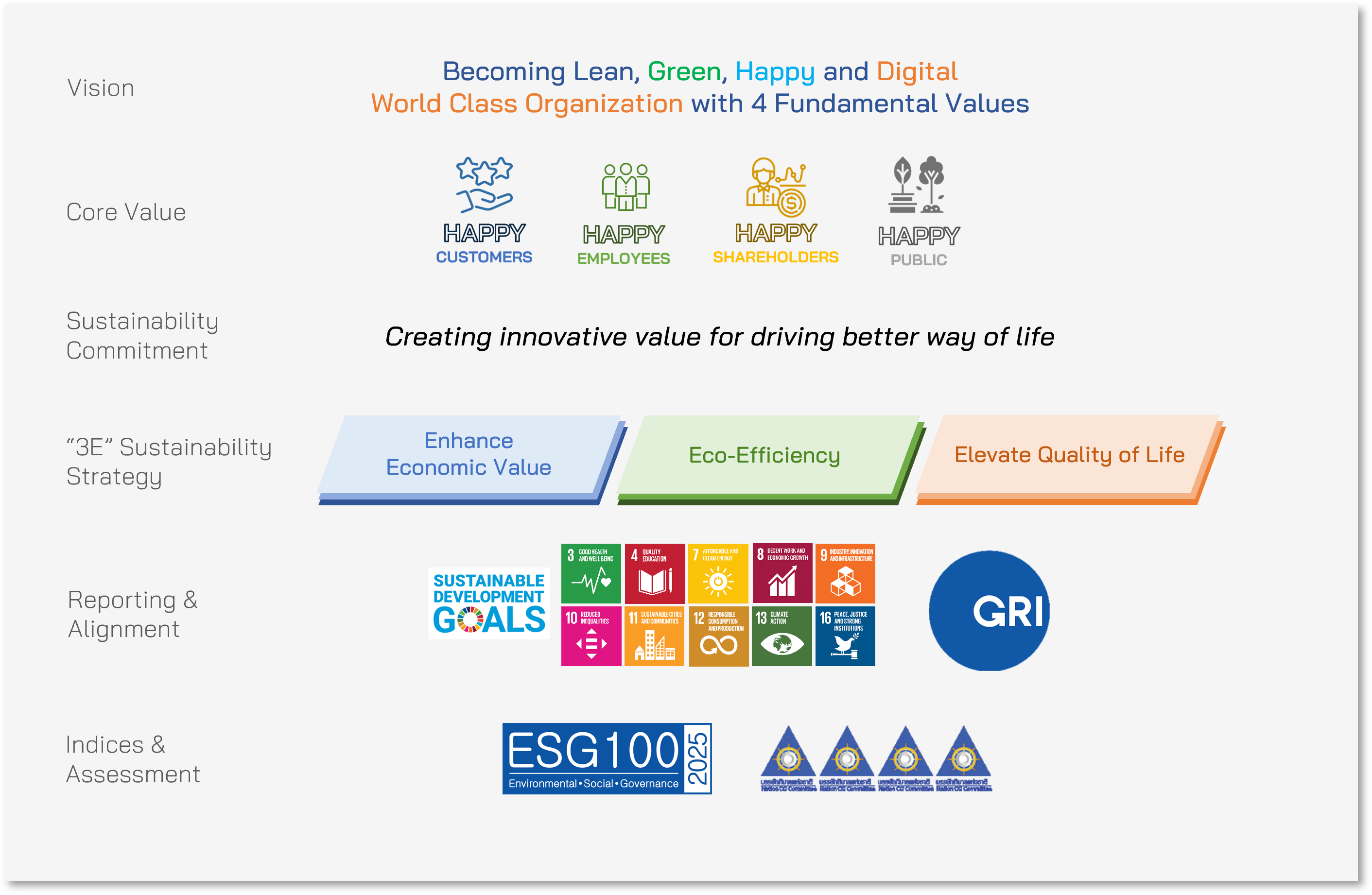
With the Company's intention of becoming the world's leading OEM automotive parts manufacturer, car dealership, and IoT connectivity & mobility company, AAPICO places great importance on innovation and the environment. This is reflected in the organization's sustainable management pledge, which is "Creating innovative value for driving a better way of life.” The Company aims to ensure business long-term viability and integrity by balancing three dimensions: environmental, social, and governance through the delivery of quality products and services that are environmentally friendly, using precise and diverse technological innovations in product production and service delivery. Moreover, the impact on the environment and society is minimized as much as possible. All operations are conducted in accordance with good business governance and the development of positive relationships with stakeholders by establishing a framework for sustainable development under the concept of "3E" to foster collaborative work culture within the organization and lay a solid foundation for long-term development in line with our dedication and vision. This involves creating a balance across three dimensions.
1. Governance aspect : Enhance Economic Value
The Company is committed to conducting its business with responsibility, integrity, honesty, transparency, and fairness. AAPICO’s business principles are guided by its ethical framework, with a focus on continuous improvement in response to changes in the economic, society, environment, and corporate governance factors.
2. Environment aspect : Eco-Efficiency
OEM car parts production significantly contributes to greenhouse gas emissions and waste, both of which have substantial impacts for the environment and surrounding communities. The Company has implemented an environmental policy and is raising resource efficiency awareness by applying innovation and the 3R principles (Reduce, Reuse, and Recycle) across our operations. Our goal is to improve resource management and achieve a 100% zero waste operation.
3. Social aspect : Elevate Quality of Life
The Company is committed to respecting human rights and ensuring fair labor practices by promoting workplace ergonomics, providing appropriate benefits, prioritizing employees’ safety and fostering skills development, particularly in innovation and creativity for all management and employees. The Company also deeply cares about the well-being of our surrounding community. The Company efforts to extend sustainability include organizing social events, supporting education local schools through educational initiatives, assisting in community development, and actively participating in environmental conservation efforts.
The Company has set the sustainability targets covering ESG aspects and aligning with the Company's sustainable strategies and framework. Its targets can be defined as follows.
Short term targets during 2022-2026
Environmental aspect
Receiving Carbon Footprint for Organization certification (CFO) in OEM business units in Thailand, while the pilot group receives Carbon Footprint of Products verification (CFP).
Developing a greenhouse gas (GHG) reduction strategy aligned with the Science Based Targets initiative (SBTi).
Monitoring and analyzing GHG emissions data while managing energy consumption through data visualization systems.
Increasing the proportion of renewable energy usage.
Reducing electricity consumption per production unit by 4% annually.
Reducing oil and gas consumption per production unit by 5% annually.
Reducing water usage per production unit by 3% annually.
Reducing general waste generated from production process per production unit by 1% annually.
Reducing hazardous waste from production process per production unit by 5% by 2026 compares with the 2023 baseline.
Social aspect
Conducting thorough Human Rights Due Diligence (HRDD) assessments.
Increasing an average of employee engagement and satisfaction score of 89%.
Achieving an average of training hour for employees of 8.5 hours/person/year[1].
Delivering 3 innovation training courses for employees’skill enhancement by 2026.
Enhancing ESG awareness among employees.
Ensuring 100% employee participation in on business code of conduct and anti-corruption training prepared by the Company in 2023.
Maintaining injury frequency rate (IFR) below 5[1].
Achieving 0 lost-time injury frequency rate (LTIFR)[1].
Governance/Economic aspect
Increasing the volume of traffic in the Company's online media with efficient and attractive information such as analyst meeting and increase in analyst coverage by 5% in 2025 compared to 2024.
Maintaining the frequency of conducting meetings to communicate the Company's operations through organizing meetings and participating in investor engagement activities, compared to operations in 2024.
Assessing 100% of the Company’s suppliers on their ESG performance.
Supporting 80% of Critical Tier 1 suppliers in adopting sustainability practices.
Encouraging 100% of the Company’s suppliers to make a public commitment to be a member of the Thai Collective Action Against Corruption (Thai CAC).
Engaging partners and suppliers on Environmental, Social and Governance (ESG) principles awareness to help reduce Scope 3 GHG emissions.
Middle term targets by 2030
Environmental aspect
Pursuing Carbon Footprint of Products certification across OEM business units in Thailand to support customers.
Reducing GHG emission in Scope 1 and 2 by 50% compared to the 2023 baseline.
Reducing GHG emission in Scope 3 by 25% compared to the 2023 baseline.
Reducing water usage per production unit by 25% compared to the 2023 baseline.
Reducing waste generated from production process per production unit by 25% compared to the 2023 baseline.
Reducing hazardous waste from production process per production unit by 5% by 2026 compares with the 2023 baseline.
Maintaining the v
olume of air pollution is within the permissible range of environmental laws and regulations.
Encouraging Critical tier 1 suppliers reports GHG emissions within Scope 1 and 2 boundaries or provide certification of emission quantities for products purchased by the Company.
Social aspect
Achieving an average of employee engagement and satisfaction score of 95%.
Delivering 5 innovation training courses for employees’skill enhancement by 2030.
Achieving 0 injury frequency rate (IFR)[1].
Achieving 0 lost-time injury frequency rate (LTIFR)[1].
Recording
0 complaints from the community on the environment and other environmental issues.
Recording
0 complaints on human rights violation and other social issues from the community.
Achieving 80% of average community satisfaction score.
Governance/Economic aspect
Increasing the frequency of meetings and activities organized by the Investor Relations department to disclose information transparently and increase opportunities for shareholders and investors to access company information by 15%.
Supporting 80% of Critical Tier 1 suppliers in adopting sustainable practices.
Assessing 100% of the Company’s suppliers on their ESG performance.
Encouraging 100% of the Company’s suppliers to make a public commitment to be a member of the Thai Collective Action Against Corruption (Thai CAC).
Ensuring at least one Critical Tier 1 supplier obtains certification as a member of the Private Sector Collective Action Coalition Against Corruption (CAC).
Engaging partners and suppliers on Environmental, Social and Governance (ESG) principles awareness to help reduce Scope 3 GHG emissions.
Encouraging Critical Tier 1 suppliers report GHG emissions within Scope 1 and 2 boundaries or provide certification of emission quantities for products purchased by the Company.
Long term targets by 2038
Environmental aspect
Reducing GHG emission in Scope 1 and 2 by 70% compared to the 2023 baseline.
Reducing GHG emission in Scope 3 by 45% compared to the 2023 baseline.
Social aspect
Treating everyone with equality and eliminating discrimination.
Enhancing employee skills and potential.
Governance/Economic aspect
Conducting responsible procurement with consideration for environmental and social impacts.
Supporting suppliers in joining the Thai Private Sector Collective Action Against Corruption (CAC).
Ultimate goals by 2048
Environmental aspect
Aiming to become a Carbon-Neutral organization by reducing greenhouse gas emissions from its operations by 90% and offsetting the remaining emissions through carbon credits, the Company's greenhouse gas report will be certified according to ISO 14068-1:2023 standards.
Governance/Economic aspect
Collaborating 100% with organizations committed to sustainability principles.
[1] The data includes performance in the area of AAPICO Hitech Public Company Limited (AH) and branch in Rayong (AHR), and its subsidiaries which are AAPICO Hitech Parts Co., Ltd. (AHP), AAPICO Hitech Tooling Co., Ltd. (AHT), AAPICO Hitech Automation Co., Ltd. (AHA), AAPICO Leadtech Co., Ltd. (AL), AAPICO Amata Co., Ltd. (AA), AAPICO Structural Products Co., Ltd. (ASP), AAPICO Forging PLC. (AF), AAPICO Precision Co., Ltd. (APC), AAPICO Plastics PLC. (APB) and branch in Rayong (APR) not include Able Sanoh Industries Co., Ltd. (ASICO) and Edscha AAPICO Automotive Co., Ltd. (EA)
UN Sustainable Development Goals
| SDG Goal |
|---|
| Goal 3 Good Health and Well-being |
| Goal 4 Quality Education |
| Goal 7 Affordable and Clean Energy |
| Goal 8 Decent Work and Economic Growth |
| Goal 9 Industry, Innovation and Infrastructure |
| Goal 10 Reduce Inequalities |
| Goal 11 Sustainable Cities and Communities |
| Goal 12 Responsible Consumption and Production |
| Goal 13 Climate Action |
| Goal 16 Peace, Justice and Strong Institutions |
Policy Review
Policy Reviewed This Year
Yes
Policy Changed This Year
Yes
Review Details
The Company regularly reviews its sustainability policies and targets to ensure alignment with its business context, resource conditions, and sustainable development directions at both national and international levels. In 2025, the Company conducted a review and further clarified its short-term sustainability targets, with a particular focus on reducing the consumption of key resources such as energy, fuel, water, and waste. These efforts aim to enhance resource efficiency and achieve tangible reductions in environmental impacts. In addition, the Company participated in a Net Zero advisory program organized by the Stock Exchange of Thailand, recognizing the importance of aligning its climate-related targets with Thailand’s national commitment to achieving net zero greenhouse gas emissions by 2050, as announced on the global stage. Currently, the Company is in the early stage of studying and assessing the feasibility of transitioning its climate ambition from Carbon Neutrality to Net Zero. This assessment remains at a preliminary phase, and the Company will carefully consider the appropriateness of any potential target revision. Should any changes be made, the Company will disclose and report further progress in due course.
Business Value Chain
Value Chain Description
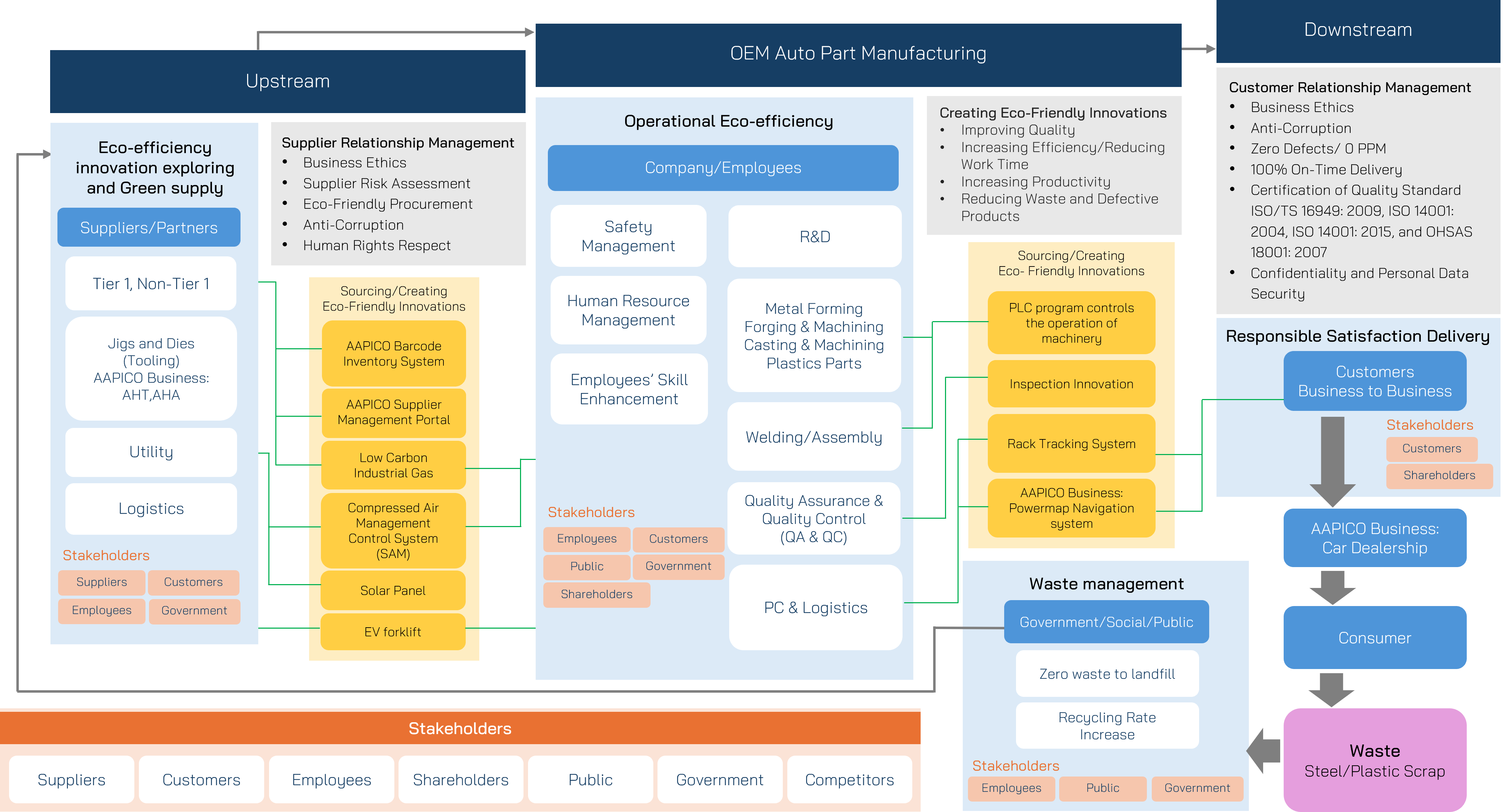
Driven by its commitment to delivering products and services through innovative technologies in both manufacturing and service operations, while taking into account stakeholders across all sectors and minimizing environmental impacts, the Company has systematically integrated its corporate vision, commitments, and sustainability framework under the “3E” concept into its business value chain.
The Company identifies and analyzes stakeholders throughout the entire value chain, assessing their expectations and material issues. These insights are translated into sustainability strategies and operational approaches across every stage of the value chain—from raw material sourcing and manufacturing to product distribution and responsible waste management.
1. Procurement of Raw Materials
The Company places strong emphasis on sourcing environmentally friendly materials and innovative solutions across key inputs, including raw materials, molds, tooling, utilities, and transportation. Key stakeholders in this process include suppliers, customers, employees, and government authorities.
Supplier relationships are managed systematically and transparently in alignment with corporate policies and best practices. This includes ESG-based supplier selection and evaluation processes, requiring compliance with the Company’s Code of Conduct and sustainable procurement guidelines, as well as ongoing monitoring in areas such as anti-corruption, human rights protection, and sustainability risk management.
To enhance operational efficiency and reduce environmental impacts, the Company has implemented environmental innovations and best practices, including:
The AAPICO Barcode Inventory System to improve inventory accuracy, reduce material losses, and enhance logistics efficiency.
The AAPICO Supplier Management Portal, a digital platform that strengthens supply chain coordination, reduces paper usage, and supports environmentally responsible operations.
Procurement of environmentally preferable materials, such as low-carbon Argon gas, to support greenhouse gas reduction in production processes.
The deployment of energy-efficient utility management innovations, including Compressed Air Management Control systems to optimize energy consumption in production lines, Solar Rooftop installations, and the replacement of diesel forklifts with electric forklifts to reduce greenhouse gas emissions and air pollutants.
2. Manufacturing Processes in the Automotive Parts Business
The Company operates its manufacturing processes in accordance with principles of safety, efficiency, and environmental responsibility throughout the value chain. It strives to deliver high-quality products and customer satisfaction while optimizing resource utilization and minimizing environmental impacts.
Stakeholders involved in this stage include employees, customers, surrounding communities, regulatory authorities, and shareholders.
The manufacturing process encompasses research and development, product design and engineering, production operations, quality assurance and control, production planning and logistics, occupational health and safety management, human resource management, and employee capability development.
The Company continuously integrates innovation and advanced technologies into its production processes to enhance productivity, product quality, and operational performance while reducing energy and resource consumption. Key technologies include:
PLC-controlled machinery systems to increase precision, reduce process losses, and promote efficient resource use.
The application of automated and digital inspection technologies to improve quality standards, reduce production waste, and enhance quality control efficiency.
The Rack Tracking System, part of the Company’s IoT Connectivity and Mobility solutions, to improve packaging management, minimize losses, and enhance logistics efficiency.
The Powermap navigation system, also part of the Company’s IoT Connectivity and Mobility solutions, to optimize transportation routes, reduce fuel consumption, and support the Company’s greenhouse gas reduction targets.
3. Product Distribution
The Company is committed to delivering products and services responsibly, with due consideration for social and environmental impacts. Customers are the primary stakeholders in the distribution process.
Customer relationships are governed by strict adherence to the Company’s Code of Conduct, anti-corruption policies, and data protection standards, including the safeguarding of confidential business information and personal data.
Throughout production and delivery, the Company focuses on providing high-quality products on schedule while complying with occupational health, safety, and environmental standards. The Company supplies automotive components to leading vehicle manufacturers for assembly into finished vehicles, which are subsequently distributed through dealer networks, which the dealership business is one of AAPICO's business.
At the end of the product life cycle, waste generated from production, use, and dismantling—such as metal and plastic scrap—is carefully managed. The Company recognizes the potential environmental impacts and supports appropriate waste management practices based on circular economy principles, with a focus on increasing recycling rates and achieving zero landfill.
4. Waste Management
The Company adheres to the principle of waste reduction at source, alongside increasing reuse and recycling initiatives, with the goal of minimizing landfill disposal. It carefully considers the impacts on surrounding communities, society, and government authorities as key stakeholders.
Waste management practices are conducted in strict compliance with applicable laws and regulations. The Company also promotes collaboration with relevant stakeholders to continuously develop and improve sustainable waste management systems.
Stakeholder Analysis
Stakeholder Analysis
| Stakeholder Type | Stakeholders | Stakeholder Expectations | Response to Expectations | Communication Activities |
|---|---|---|---|---|
| External stakeholders | 2923 · Description: Customers | Safety Working Conditions, Quality Products, Competitive Price, On time Delivery, Good Engineering, Transparent and Professional Management, Environmental Management | Safety operation
, 0 PPM, improving operational efficiency in the effort to achieve zero defect, Effective cost management, On-time delivery, Managing good relations with customers
, Compliance with customer policies and business ethics, Customer data protection
, Following international standards in operation in terms of quality and environmental management
| 2940 · Description: Social Event · 2941 · Description: Online Communication · 2943 · Description: External Meeting · 2945 · Description: Complaint Reception · 2947 · Description: Satisfaction Survey · 2949 · Other name: Annual customer policy acknowledgment/ customer meeting and report · Description: Others · 2949 · Other name: Company website/ Annual report/ Sustainability report · Description: Others · 2949 · Other name: Relationship building activities · Description: Others |
| Internal stakeholders | 2921 · Description: Employees | Good pay and welfare, Fairness, Loyalty and Engagement, Human Rights, Safety, Good quality of life, Self-improvement, Advancement in job position | Managing good compensation and welfare
, Managing work environment and safety
, Developing employees’ skills to fit the Companies’ growth
, Improving the employees’ quality of life
, Fair treatment and respect for human rights
, Personal data Protection
, Performance Evaluation
, Equitable pay and benefits for employees
| 2940 · Description: Social Event · 2941 · Description: Online Communication · 2942 · Description: Internal Meeting · 2945 · Description: Complaint Reception · 2946 · Description: Employee Engagement Survey · 2948 · Description: Training / Seminar · 2949 · Other name: Welfare meeting · Description: Others |
| External stakeholders | 2913 · Description: Shareholders | Remunerations, Transparency in management, Future investment plans and Competitiveness, Business’ sustainability, Organization risk management, Good corporate | Building up the investors’ confidence, Disclosure of traceable factual information, Reporting corporate social responsibilities, Risk Assessment and Management, Appropriate dividend payment, Annual credit rating
| 2938 · Description: Visit · 2939 · Description: Press Release · 2941 · Description: Online Communication · 2944 · Description: Annual General Meeting (AGM) · 2945 · Description: Complaint Reception · 2949 · Other name: Company website/ Annual report/ Sustainability report · Description: Others · 2949 · Other name: Investor relation activities · Description: Others · 2949 · Other name: Analyst meetings · Description: Others · 2949 · Other name: Disclosure of information and participation in activities to meet investors organized by the Thai Stock Exchange (SET) · Description: Others |
| External stakeholders | 2899 · Description: Suppliers | Profits, Business stability, On-time payment, Transparent business conduct, Fair and clear business contracts, Improving along with the suppliers | Managing the Company’s credibility and the business partners’ confidence
, Improving business partners’ capabilities by increasing competitiveness
, Communicating anti-corruption policy and CSR policy as well as exchange information and opinions
, Improving relations with win-win strategy
, Transparent, fair, and verifiable procurement
| 2938 · Description: Visit · 2940 · Description: Social Event · 2941 · Description: Online Communication · 2943 · Description: External Meeting · 2945 · Description: Complaint Reception · 2948 · Description: Training / Seminar · 2949 · Other name: Suppliers’ evaluation · Description: Others · 2949 · Other name: Policies and regulations in procurement · Description: Others |
| External stakeholders | 2902 · Description: Community · 2928 · Description: Society | Health safety, No pollution to the community, Community engagement and development, career opportunities for community | Complaint management and proper community remedies
, Arranging community activities for engagement contribution
, Building good relations between the factories and the surrounding communities
, Career opportunity for community
, Efficient resource management to reduce environmental impact | 2938 · Description: Visit · 2940 · Description: Social Event · 2943 · Description: External Meeting · 2945 · Description: Complaint Reception · 2947 · Description: Satisfaction Survey |
| External stakeholders | 2931 · Description: Government agencies and Regulators | Fully abiding by the law, Paying taxes, Giving cooperation, Managing complaints with the community | Following the government’s regulations
, Cooperate with the government
| 2948 · Description: Training / Seminar · 2949 · Other name: Visiting on important occasions · Description: Others · 2949 · Other name: Company website · Description: Others |
| External stakeholders | 2898 · Description: Competitors | Fair competitions | Transparent and fair business operations | 2938 · Description: Visit · 2949 · Other name: Becoming a member of an association · Description: Others · 2949 · Other name: Meetings and sharing experience · Description: Others |
Environmental Policy & Guidelines
Has an Environmental Policy
Yes
Policy Description
One of the Group's core businesses is the manufacture of OEM automotive parts, including the design, production, and installation of jigs, fixtures, and metal stamping dies for fully integrated vehicle assembly processes. Such operations inevitably generate manufacturing waste and greenhouse gas emissions. Recognizing the importance of environmental stewardship, the Company has therefore established a systematic Environmental Management System and formally adopts and reviews its Environmental Policy on an annual basis. This policy serves as a governance framework to ensure effective environmental management across all operations.
The Environmental Policy emphasizes clear and structured approaches for identifying, monitoring, and managing material environmental issues that must be regularly assessed at all operational sites. The Company’s environmental commitments and practices are summarized as follows:
Protect the environment and conserve natural resources including energy. AAPICO strives to optimize the use of these resources while minimizing the environmental impact, ensuring sustainability in all our operations.
Pollution in prevented by establishing objectives and targets. Implement and review it to minimize pollution.
Comply with environmental laws and regulations establishing comprehensive criteria to be the baseline for our operational practices.
Continuously improve the environmental management system, production processes, services, and products of the Company in accordance with the requirements of the ISO 14001 standard.
In addition, the Company has established a Carbon Neutrality Roadmap by adopting ISO 14001 as the operational framework and setting greenhouse gas emission reduction plans and targets in accordance with the Science-Based Targets initiative (SBTi), which are aligned with the objectives of the Paris Agreement.
The Company conducts measurement, data collection, and reporting of greenhouse gas emissions across Scopes 1, 2, and 3, covering both the Company and its subsidiaries. Sustainability initiatives are implemented in accordance with the declared greenhouse gas reduction plan. The Environmental Policy, targets, and implementation guidelines are communicated to management, employees, and relevant stakeholders to ensure awareness and compliance, and are appropriately disclosed to the public.
These initiatives and implementation approaches have been reviewed and approved by the Board of Directors and C-level management. The Company and its subsidiaries are required to integrate these measures into operations and project development to achieve the defined objectives. The roadmap toward the Company’s long-term environmental goals is structured around five key focus areas:
Waste reduction and resource management
Energy efficiency enhancement
Operational efficiency through innovation
Renewable energy utilization
Carbon dioxide sequestration
Policy Document Link
https://investor.aapico.com/storage/content/corporate-governance/corperate-governance-policy/20250425-ah-cg-environmental-policy-en.pdf
Page Number in Report
1
Environmental Guidelines
| Guideline |
|---|
| Electricity Management |
| Fuel Management |
| Renewable/Clean Energy Management |
| Water Management |
| Waste Management |
| Greenhouse Gas and Climate Change Management |
| Air Quality Management |
Environmental Policy Review
Policy Reviewed This Year
Yes
Review Details
In 2025, the Company reviewed and refined its environmental targets under its Carbon Neutrality framework. This review was based on trends and performance in greenhouse gas (GHG) emissions reduction across Scope 1, Scope 2, and Scope 3 during 2023–2024, together with an analysis of energy and resource consumption data throughout the value chain. The objective was to assess alignment with, and the feasibility of achieving, the Company’s short-, medium-, and long-term environmental targets.
Following this review, the Company established measurable short-term targets aimed at improving resource efficiency, reducing energy consumption, and minimizing waste generation from production processes, which represent significant sources of GHG emissions. These targets directly support GHG emissions reduction in Scope 1 and Scope 2, and in certain cases contribute to reductions in Scope 3 emissions. The short-term targets also serve as a critical foundation for advancing the Company toward its Carbon Neutrality goal.
The Company has defined clear performance indicators and implemented regular monitoring, evaluation, and progress reviews under the oversight of C-level management to ensure effective implementation, continuous improvement, and alignment with planned actions. The short-term targets for energy and resource reduction are as follows:
Short-term Targets (2022–2026)
Reduce electricity consumption per production unit by 4% per year
Reduce water consumption per production unit by 3% per year
Reduce general waste generated from production processes and operations per production unit by 1% per year
Reduce hazardous waste generated from production processes and operations per production unit by 5% by 2026, compared with the 2023 baseline
In parallel, the Company is assessing the feasibility of establishing a long-term target to achieve net zero greenhouse gas emissions (Net Zero) by 2050, in line with national policy commitments. This assessment considers long-term emissions reduction pathways, technological readiness, operational structure, and the evolving regulatory and legal landscape. The objective is to enhance organizational resilience, mitigate climate transition risks, and support sustainable business operations over the long term.
Any Net Zero target-setting and related implementation plans will be proposed to C-levelmanagement and the Board of Directors for review and approval in accordance with the Company’s governance framework. Progress will be disclosed transparently in the Company’s annual reports.
Policies & Guidelines Changed
| Change |
|---|
| Electricity Management |
| Water Management |
| Waste Management |
| Greenhouse Gas and Climate Change Management |
Energy — Plan & Guidelines
Has an Energy Management Plan
Yes
Plan Description
The Company has established a systematic approach to managing the use of fuel, energy, and industrial gases under its environmental management and climate transition framework. This approach focuses on improving resource efficiency, reducing energy costs, and minimizing greenhouse gas (GHG) emissions arising from manufacturing processes and operational activities across both the Company and its subsidiaries.
The Company encourages its subsidiaries to develop and implement measurable and results-oriented initiatives to support reductions in energy consumption and greenhouse gas (GHG) emissions across all 3 emission scopes. The key operational approaches are structured around 4 main areas, as outlined below:
1. Promotion of Renewable Energy Use
The Company promotes the installation and utilization of electricity generated from renewable energy sources, such as solar power systems, to substitute energy derived from fossil fuels. These initiatives contribute to the reduction of Scope 2 GHG emissions while increasing the proportion of clean energy used in operations.
2. Improvement of Energy Efficiency in Manufacturing Processes
The Company continuously implements energy efficiency improvement measures, including the replacement of conventional lighting with LED systems and the upgrading of machinery motors to higher-efficiency models. These initiatives help reduce energy consumption per unit of production and support the reduction of both Scope 1 and Scope 2 GHG emissions.
3. Transition from Fuel-Based to Electric Energy
The Company supports the reduction of fossil fuel consumption by transitioning equipment and vehicles from fuel-based systems to electric alternatives, such as electric forklifts and electric vehicles for internal transportation. These measures directly contribute to the reduction of Scope 1 GHG emissions.
4. Promotion of Environmentally Friendly Industrial Gases
The Company encourages the adoption of environmentally friendly industrial gases, such as low-carbon argon, to reduce greenhouse gas emissions related to raw material sourcing and upstream supply chain activities, contributing to the management and reduction of Scope 3 emissions.
To support effective energy and emissions management, the Company has established energy-related key performance indicators (KPIs) and targets as follows:
Short-term targets (2022–2026)
Increase the proportion of renewable energy use
Reduce electricity consumption per unit of production by 4% per year
Reduce oil and industrial gas consumption per unit of production by 5% per year
Medium-term target (by 2030)
Reduce Scope 1 and Scope 2 GHG emissions by 50% compared with the 2023 base year
Long-term target (by 2038)
Reduce Scope 1 and Scope 2 GHG emissions by 70% compared with the 2023 base year
The implementation and performance of these initiatives are subject to oversight by senior management. Progress is regularly monitored, assessed, and reviewed to ensure that energy management and GHG emission reduction efforts remain aligned with the Company’s overall strategy and effectively support its long-term transition toward carbon neutrality.
Energy — Electricity Consumption
Electricity Consumption
| Metric | Current Year | Previous Year | Two Years Ago |
|---|---|---|---|
| Total electricity consumption within the organization (Kilowatt-Hours) | 59,313,043.03 | 55,623,492.79 | 61,805,086.01 |
| Electricity purchased for consumption from non-renewable energy sources (Kilowatt-Hours) | 55,564,336.13 | 53,914,499.68 | 59,934,593.3 |
| Electricity purchased or generated for consumption from renewable energy sources (Kilowatt-Hours) | 3,748,706.9 | 1,708,993.11 | 1,870,492.71 |
Energy — Fuel Consumption
Fuel Consumption
| Metric | Current Year | Previous Year | Two Years Ago |
|---|---|---|---|
| Jet fuel (Litres) | |||
| Diesel (Litres) | 117,053.6 | 105,237.47 | 172,924 |
| Gasoline (Litres) | 217,500.02 | 185,669.41 | 178,951.06 |
| Fuel oil (Litres) | |||
| Crude oil (Barrels) | |||
| Natural gas (Standard cubic feet) | 1,968,056,875.84 | 3,419,767,307.11 | 4,312,297,081.24 |
| LPG (Kilograms) | 116,758.64 | 137,226.83 | 286,339.72 |
| Steam (Metric tonnes) | |||
| Coal (Metric tonnes) |
Other Fuels
| Fuel | Unit | Current Year | Previous Year | Two Years Ago | Remark |
|---|---|---|---|---|---|
| Total Consumption of Argon Gas | 1672 · Description: Kilograms | 1,228,806.38 | 1,227,729.42 | 1,413,263.46 | Total argon gas refers to the total volume of argon gas, including both conventional and low-carbon argon. |
| Low Carbon Argon Gas | 1672 · Description: Kilograms | 1,225,548.62 | 247,061 | 0 | The Company and its subsidiaries have transitioned to the use of low-carbon argon gas in place of conventional argon gas since October 2024. However, some subsidiaries still require the use of conventional argon gas due to technical limitations in their production processes. |
Energy — Targets
Has Set Targets
Yes
Targets
| Target | Base Year | Base Year Value | Target Year | Target Change (%) | Unit |
|---|---|---|---|---|---|
| Reduction of electricity purchased for consumption | 2,023 | 61,805.09 | 2,030 | 50 | Megawatt-Hours |
| Reduction of fuel consumption | 2,023 | 351,875.06 | 2,030 | 50 | Litres |
Energy — Performance & Outcomes
Has Performance Results
Yes
Performance Description
In 2025, the Company collected and reported energy consumption data covering electricity consumption from purchased electricity and renewable sources, liquid fuel consumption, and gaseous fuel consumption. The scope of data collection includes 12 automotive parts manufacturing subsidiaries in Thailand, located in Ayutthaya, Samut Prakan, Chonburi, and Rayong provinces. The purpose of this data collection is to support the preparation of the Company’s annual greenhouse gas (GHG) inventory, as well as to facilitate the development of measures to improve energy efficiency and to plan for the reduction of grid electricity consumption and fuel use in the future. A summary of the Company’s energy consumption and related initiatives in 2025 is presented below.
1. Electricity Consumption
Electricity consumption and electricity intensity per unit of production
Electricity Consumption | Performance | Performance in 2025 compared to the baseline year 2023 (%) | ||
2023 | 2024 | 2025 | ||
Metal forming, Jigs and dies businesses in Ayutthaya and Rayong provinces (AH AHA AHP AHT AL AHR) | ||||
Electricity consumption (Megawatt-hours) | 17,675.34 | 16,021.65 | 17,608.01 | Dropped by 0.38% |
Electricity consumption intensity (Megawatt-hours per thousand units of production) | 0.18 | 0.21 | 0.25 | Rose by 39.44% |
Metal stamping and Welding assembly businesses in Chonburi province (AA ASP) | ||||
Electricity consumption (Megawatt-hours) | 16,151.84 | 14,015.04 | 15,554.16 | Dropped by 3.70% |
Electricity consumption intensity (Megawatt-hours per thousand units of production) | 0.99 | 1.34 | 1.07 | Rose by 8.34% |
Forging and Machining businesses in Chonburi province (AF APC) | ||||
Electricity consumption (Megawatt-hours) | 17,137.30 | 15,974.62 | 16,377.51 | Dropped by 4.43% |
Electricity consumption intensity (Megawatt-hours per thousand units of production) | 1.69 | 1.73 | 1.82 | Rose by 8.18% |
Plastic Automotive Parts and Fuel Tanks businesses in Samut Prakan and Rayong provinces (APB APR) | ||||
Electricity consumption (Megawatt-hours) | 10,840.61 | 9,612.18 | 9,773.36 | Dropped by 9.84% |
Electricity consumption intensity (Megawatt-hours per thousand units of production) | 0.41 | 0.43 | 0.43 | Rose by 6.01% |
Total electricity consumption in all facilities (Megawatt-hours) | 61,805.09 | 55,623.49 | 59,313.04 | Dropped by 4.03% |
Total electricity consumption intensity in all facilities (Megawatt-hours per thousand units of production) | 0.40 | 0.47 | 0.51 | Rose by 24.97% |
In 2025, the Company and its subsidiaries under the automotive parts manufacturing business in Thailand, totaling 12 companies, recorded a combined electricity consumption of 59,313.04 megawatt-hours (MWh), including electricity purchased from the grid and electricity generated from renewable energy sources. The total electricity consumption decreased by 4.03% compared with the base year 2023. The reduction was primarily attributable to various energy efficiency initiatives, including improving machinery efficiency through motor replacement, controlling exhaust fan energy consumption through the installation of Programmable Logic Controller (PLC) systems, optimizing electricity usage of cooling tower systems, and installing skylight roofing systems to enhance natural lighting. In addition, several facilities completed the installation of solar rooftop systems, enabling the use of electricity generated from solar energy during 2025.
However, when considering electricity consumption intensity relative to total production output, the Company recorded an increase of 24.97% compared with the base year. This was mainly due to a decline in production volume of approximately 23% compared with 2023. Despite the lower production levels, certain machinery and systems still needed to remain operational during working hours to maintain equipment conditions and ensure operational readiness, even during periods without active production. As a result, the Company was not able to achieve the targeted reduction in electricity consumption per unit of production.
In 2025, the Company continued implementing various initiatives aimed at improving electricity management, reducing electricity consumption, and increasing the share of renewable energy use, in line with its sustainability strategy. The key initiatives implemented under these objectives are summarized below.
1.1 Promotion of Renewable Energy Use
1.1.1 Solar Power Generation (Solar Panels)
The Company has implemented a solar rooftop installation program across 12 automotive manufacturing facilities in Thailand. The project began in 2021, with completion originally targeted for the end of 2025. However, 2 subsidiaries were unable to complete the installation within 2025 due to structural limitations that required roof reinforcement to ensure installation safety and structural integrity. The Company expects the installations to be completed and solar electricity generation to commence by 2026. During 2025, the Company expanded the installation of solar panels across multiple facilities, resulting in 8 subsidiaries utilizing solar energy during the year. The Company monitored and recorded electricity generation and cost savings from solar power on a monthly basis throughout 2025. Detailed results of electricity generation and cost reductions from solar panel systems are presented in the table below.
Details | Proportion of Renewable Energy Consumption (%) | Performance in 2025 | |||
2023 | 2024 | 2025 | Electricity Cost Reduction (THB) | Proportion of Usage in 2025 compared to 2024 | |
Electricity from solar panels | |||||
AAPICO Hitech Rayong (AHR) | 22.57% | 20.59% | 16.72% | 1.78 million | Dropped by 19% |
AAPICO Plastics Rayong (APR) | 17.21% | 15.93% | 16.25% | 0.85 million | Rose by 2% |
AAPICO Hitech (AH) and AAPICO Hitech Automation (AHA) | - | - | 17.17% | 1.28 million | - |
AAPICO Hitech Parts (AHP) | - | - | 17.45% | 1.73 million | - |
AAPICO Hitech Tooling (AHT) | - | - | 21.49% | 0.58 million | - |
AAPICO Leadtech (AL) | - | - | 24.44% | 0.39 million | - |
AAPICO Precision (APC) | - | - | 1.82% | 0.15 million | - |
Total Electricity usage from solar panels in all 8 facilities | 3.03% | 3.07% | 6.32% | 6.75 million | Rose by 105.71% |
As shown in the table, the Company recorded a 105.71% increase in electricity consumption from solar energy compared with the previous year, resulting in electricity cost savings of approximately THB 6.75 million. This increase was primarily driven by the expansion of rooftop solar panel system installations and the commencement of renewable electricity usage at several subsidiaries during 2025.However, some subsidiaries experienced a decline in the proportion of renewable electricity consumption, mainly due to lower production levels, which affected the efficiency of renewable electricity utilization. The Company has therefore engaged with relevant departments to identify measures to improve the efficiency of solar power utilization in the following year.
1.1.2. Procurement of Renewable Electricity
2 subsidiaries in Portugal, namely AAPICO Maia Co., Ltd. (AMI) and AAPICO Agueda Co., Ltd. (AAG), have entered into agreements to procure electricity from renewable energy producers that generate power primarily from wind energy. As a result, both companies were able to utilize 100% renewable electricity within their operations in 2025. In total, the 2 subsidiaries consumed 130,889.01 megawatt-hours (MWh) of electricity generated from wind power. Of this amount, 87,254.46 MWh was consumed by AAPICO Maia Co., Ltd., while 43,634.55 MWh was consumed by AAPICO Agueda Co., Ltd. compared with the previous year, electricity consumption at AAPICO Maia Co., Ltd. increased by 7%, while electricity consumption at AAPICO Agueda Co., Ltd. slightly decreased by 1%, resulting in an overall 4% increase in wind power consumption across both subsidiaries. The data has been verified and supported by renewable electricity certificates issued by EDP (Energias de Portugal).
In addition, AAPICO Forging Public Company Limited (AF) procured renewable electricity certified under The International REC Standard (I-REC). The purchased electricity has an emission factor of 0.3921 kilograms of carbon dioxide equivalent per kilowatt-hour (kgCO2e/kWh), which is lower than the Thailand national grid emission factor of 0.4999 kgCO2e/kWh, representing a reduction of approximately 21.5%. In 2025, AAPICO Forging Public Company Limited consumed 11,679.06 MWh of renewable electricity, which resulted in avoided greenhouse gas emissions of approximately 1,259 tons of carbon dioxide equivalent (tCO2e) compared with electricity generated from the national grid based on the country’s average emission factor.
1.1.3. Skylight Roof Improvement and High Bay Lighting Installation Project
In mid-2025, the Company expanded its Skylight roof replacement project along with the installation of energy-efficient High Bay lighting at the facility of AAPICO Structural Products Co., Ltd. (ASP). The project aims to ensure that employees receive adequate natural lighting for their work environment while reducing electricity consumption from artificial lighting during daytime operations. The project installation and performance monitoring began in July 2025. The newly installed high-efficiency skylight roof system, operating at 100% efficiency, allows natural daylight to illuminate the production area, significantly reducing the need for artificial lighting during daytime hours. As a result, the project has reduced electricity consumption from lighting by approximately 10.50 megawatt-hours (MWh) per month, representing a 40.11% reduction compared with electricity usage prior to the project implementation. In addition, the Company achieved electricity cost savings of approximately THB 44,086 per month and reduced Scope 2 greenhouse gas emissions by approximately 5.25 tons of carbon dioxide equivalent (tCO2e) per month.
1.2 Energy Efficiency Improvement in Production Processes
1.2.1 Machinery Efficiency Improvement Projects in Manufacturing Facilities
In 2025, the Company and its subsidiaries under the automotive parts manufacturing business in Thailand implemented a range of initiatives aimed at improving energy efficiency and reducing energy consumption within production processes. Key initiatives include:
Replacing motors in selected production lines to enhance machinery operating efficiency.
Installing inverter systems to control the operation of ventilation fan motors and optimize electricity consumption.
Implementing Programmable Logic Controller (PLC) systems to manage and optimize energy consumption of exhaust systems.
Installing control devices for Cooling Tower systems to regulate electricity consumption according to appropriate water temperature levels.
Installing Air Dryer systems to remove moisture from compressed air generated by the Air Compressor system, thereby improving air quality, reducing equipment corrosion, and ensuring more stable system operation.
Collectively, these projects resulted in energy savings of approximately 21.14 megawatt-hours (MWh) per month, equivalent to cost savings of approximately THB 89,000 per month, and Scope 2 greenhouse gas emission reductions of approximately 9.25 tons of carbon dioxide equivalent (tCO2e) per month. Further details of these initiatives are disclosed in the 2025 Sustainability Report.
2. Fuel Oil Consumption
Total fuel oil consumption and fuel intensity per unit of production of operational facilities
Fuel consumption | Performance | Performance in 2025 compared to the baseline year 2023 (%) | ||
2023 | 2024 | 2025 | ||
Metal forming, Jigs and dies businesses in Ayutthaya and Rayong provinces (AH AHA AHP AHT AL AHR) | ||||
Benzene consumption (Kiloliters) | 82.61 | 90.14 | 121.80 | Rose by 47.43% |
Benzene consumption intensity (Kiloliters per thousand units of production) | 0.0008 | 0.0012 | 0.0017 | Rose by 106.36% |
Diesel consumption (Kiloliters) | 113.26 | 52.45 | 59.33 | Dropped by 47.62% |
Diesel consumption intensity (Kiloliters per thousand units of production) | 0.0011 | 0.0007 | 0.0008 | Dropped by 26.68% |
Metal stamping and Welding assembly businesses in Chonburi province (AA ASP) | ||||
Benzene consumption (Kiloliters) | 42.60 | 32.48 | 37.26 | Dropped by 12.30% |
Benzene consumption intensity (Kiloliters per thousand units of production) | 0.0026 | 0.0031 | 0.0026 | Dropped by 1.33% |
Diesel consumption (Kiloliters) | 33.98 | 32.86 | 35.41 | Rose by 4.19% |
Diesel consumption intensity (Kiloliters per thousand units of production) | 0.0021 | 0.0031 | 0.0024 | Rose by 17.21% |
Forging and Machining businesses in Chonburi province (AF APC) | ||||
Benzene consumption (Kiloliters) | 26.42 | 27.74 | 30.87 | Rose by 16.84% |
Benzene consumption intensity (Kiloliters per thousand units of production) | 0.0026 | 0.0030 | 0.0034 | Rose by 32.27% |
Diesel consumption (Kiloliters) | 6.62 | 4.63 | 4.88 | Dropped by 26.31% |
Diesel consumption intensity (Kiloliters per thousand units of production) | 0.0007 | 0.0005 | 0.0005 | Dropped by 16.59% |
Plastic Automotive Parts and Fuel Tanks businesses in Samut Prakan and Rayong provinces (APB APR) | ||||
Benzene consumption (Kiloliters) | 27.32 | 35.30 | 27.47 | Rose by 0.55% |
Benzene consumption intensity (Kiloliters per thousand units of production) | 0.0010 | 0.0016 | 0.0012 | Rose by 18.24% |
Diesel consumption (Kiloliters) | 19.06 | 15.29 | 17.44 | Dropped by 8.50% |
Diesel consumption intensity (Kiloliters per thousand units of production) | 0.0007 | 0.0007 | 0.0008 | Rose by 7.60% |
Total Benzene consumption in all facilities (Kiloliters) | 178.95 | 185.67 | 217.50 | Rose by 21.54% |
Total Benzene consumption intensity in all facilities (Kiloliters per thousand units of production) | 0.0012 | 0.0016 | 0.0019 | Rose by 58.27% |
Total Diesel consumption in all facilities (Kiloliters) | 172.92 | 105.24 | 117.05 | Dropped by 32.31% |
Total Diesel consumption intensity in all facilities (Kiloliters per thousand units of production) | 0.0011 | 0.0009 | 0.0010 | Dropped by 11.85% |
Total fuel consumption in all facilities (Kiloliters) | 351.88 | 290.91 | 334.55 | Dropped by 5% |
Total fuel consumption intensity in all facilities (Kiloliters per thousand units of production) | 0.0023 | 0.0025 | 0.0029 | Rose by 24% |
Based on the analysis of fuel consumption, in 2025 the Company and its subsidiaries recorded a 5% reduction in total fuel consumption, including both gasoline and diesel, compared with the 2023 baseline year. However, total production volume in 2025 decreased by 23% compared with the baseline year, resulting in a 24% increase in fuel consumption intensity per unit of production.
When considering the data by production category, the details are as follows:
Metal forming, Jigs and dies businesses in Ayutthaya and Rayong provinces (AH AHA AHP AHT AL AHR)
5 subsidiaries located in Ayutthaya Province reported a significant increase in benzene consumption and benzene intensity per unit of production. This was primarily driven by an increase in employee fuel allowances included in salaries, as well as higher usage of company vehicles, while overall production declined compared with the baseline year.
For diesel consumption, however, the Company and its subsidiaries recorded a decrease in total usage, mainly due to the transition from fuel-powered forklifts to electric forklifts, as well as improved logistics management, including the consolidation of delivery schedules to reduce transportation trips. As a result, although production decreased compared with the baseline year, diesel consumption declined at a higher rate, leading to a reduction in both total diesel consumption and diesel intensity per unit of production.
Metal stamping and Welding assembly businesses in Chonburi province (AA ASP)
Both subsidiaries reported a slight decrease in benzene consumption and benzene intensity per unit of production, mainly due to reduced use of company vehicles, despite lower production levels compared with the baseline year. However, diesel consumption increased, primarily due to higher employee fuel allowances included in salaries and increased diesel usage for fire pump operations. Combined with the decline in production volume, this resulted in an increase in diesel consumption intensity per unit of production.
Forging and Machining businesses in Chonburi province (AF APC)
Both subsidiaries recorded a decrease in benzene consumption and benzene consumption intensity per unit of production, primarily due to reduced use of internal company vehicles. This was achieved despite AAPICO Forging’s production volume decreasing by 19% compared to the base year. Diesel consumption also decreased for both companies, mainly due to lower production volumes, which resulted in fewer delivery trips to customers.
Plastic Automotive Parts and Fuel Tanks businesses in Samut Prakan and Rayong provinces (APB APR)
Both subsidiaries reported a slight decrease in benzene consumption and benzene intensity per unit of production, mainly due to lower employee fuel allowances and reduced use of company vehicles, despite a decline in production compared with the baseline year.
For diesel consumption, both companies recorded a reduction in fuel usage due to improved logistics management, including the consolidation of delivery schedules and reduced shipment frequency. However, since production declined by 15% compared with the baseline year, diesel consumption intensity per unit of production increased.
In 2025, the Company implemented various initiatives aimed at managing and reducing fuel consumption in alignment with its sustainability strategy. The key projects are summarized below, categorized by their respective objectives.
2.1 Promoting the Use of Electricity to Replace Fuel Consumption
In 2025, the Company continued to prioritize the transition of internal transportation systems toward cleaner energy sources, particularly through the replacement of fuel-powered forklifts with electric forklifts, which are critical to manufacturing operations. This initiative was first introduced in 2024 and has been continuously implemented to support the reduction of fossil fuel consumption and to increase the proportion of electricity use in operations.
Based on operational data in 2025, the Company operated a total of 51 forklifts, of which 43 units were electric, representing 84.31% of the total fleet. Meanwhile, forklifts powered by internal combustion engines using LPG and diesel accounted for 6 and 2 units, respectively, representing a combined 15.69%. This transition reflects the Company’s progress in reducing reliance on fossil fuels and increasing the use of electricity, which in the future may be increasingly sourced from renewable energy.
A comparison of fuel consumption data between 2023 and 2025 shows that the Company successfully reduced diesel consumption by 50.67 kiloliters and LPG consumption by 175.14 tons, equivalent to reductions of 95.08% and 80.95%, respectively. As a result, direct greenhouse gas emissions (Scope 1) were reduced by 702.03 tCO2e. However, when accounting for indirect emissions from electricity consumption (Scope 2) associated with charging electric forklifts, the project achieved a net reduction of 373.13 tCO2e in total greenhouse gas emissions.
Looking ahead, the Company has established a long-term target to transition its forklift fleet to 100% electric, or as close as practicable. Nevertheless, for the transportation of heavy materials or products exceeding the capacity of electric forklifts, some internal combustion forklifts may still be required. The Company will continue to adopt and upgrade technologies to support its long-term greenhouse gas reduction objectives.
2.2 Enhancing Energy Efficiency
In addition to transitioning from fuel-based to electric transportation, the Company has focused on improving transportation efficiency to further reduce fuel consumption. This includes optimizing logistics planning through the consolidation and reduction of delivery trips, thereby minimizing fuel usage in operations. To support this approach, dedicated working teams have implemented various initiatives to enhance transportation management efficiency. As each project has a different implementation timeline and completion period, the Company reports performance on a monthly basis to systematically reflect project outcomes. Details of these initiatives are presented below.
Project | Performance in 2025 compared to 2024 or prior to project implementation | |||
Reduction in Transportation Trips | Reduction Rate (%) | Cost Savings from Reduced Trip (THB) | GHG Emission Reduction | |
2.2.1. Procurement via nearby automated vending machines, replacing truck deliveries | Reduced by 41 trips per month | 84.72% | THB 6,800 per month | 0.46 tCO2e per month |
2.2.2. Transportation planning optimization by consolidation of multiple deliveries | Reduced by 12 trips per month | 58.15% | Approximately THB 28,000 per month | 0.30 tCO2e per month |
2.2.3. Truck upgrade from 6-wheel trucks to trailer trucks in order to increasing load capacity | Reduced by 59 trips per month | 50% | Approximately THB 47,000 per month | 0.58 tCO2e per month |
2.2.4. Route optimization and trip consolidation by combining multi-destination deliveries into a single route | Trip consolidation: Reduced by 10 trips per month Trip reduction: Reduced by 5 trips per month | Consolidation: 81.94% Reduction: 86.11% | THB 10,641.67 per month | 0.28 tCO2e per month |
3. Industrial Gas Consumption
Tota industrial gas consumption and industrial gas intensity per unit of production of operational facilities
Industrial Gas consumption | Performance | Performance in 2025 compared to the baseline year 2023 (%) | ||
2023 | 2024 | 2025 | ||
Metal forming, Jigs and dies business in Ayutthaya and Rayong provinces (AH AHA AHP AHT AHR AL) | ||||
LPG consumption (Tons) | 41.68 | 28.20 | 33.35 | Dropped by 20% |
LPG consumption intensity (Tons per thousand units of production) | 0.00062 | 0.00056 | 0.00067 | Rose by 9.15% |
Argon consumption both conventional and low-carbon types (Tons) | 44.45 | 41.53 | 17.11 | Dropped by 61.51% |
Argon consumption intensity both conventional and low-carbon types (Tons per thousand units of production) | 0.00063 | 0.00066 | 0.00082 | Rose by 25.40% |
Low-Carbon Argon Consumption Replacing Conventional Argon (2025 Performance Compared to 2024) | ||||
Low Carbon Argon consumption (Tons) | - | 4.14 | 14.16 | Rose by 241.68% |
Low Carbon Argon consumption intensity (Tons per thousand units of production) | - | 9.98% | 82.73% | Rose by 729.41% |
Metal stamping and Welding assembly businesses in Chonburi province (AA ASP) | ||||
LPG consumption (Tons) | 131.48 | 50.45 | 22.14 | Dropped by 83.16% |
LPG consumption intensity (Tons per thousand units of production) | 0.0081 | 0.0048 | 0.0015 | Dropped by 81.06% |
Argon consumption both conventional and low-carbon types (Tons) | 1,368.63 | 1,186.05 | 1,211.39 | Dropped by 11.49% |
Argon consumption intensity both conventional and low-carbon types (Tons per thousand units of production) | 0.0838 | 0.1134 | 0.0834 | Dropped by 0.42% |
Low-Carbon Argon Consumption Replacing Conventional Argon (2025 Performance Compared to 2024) | ||||
Low Carbon Argon consumption (Tons) | - | 242.92 | 1,211.39 | Rose by 398.68% |
Low Carbon Argon consumption intensity (Tons per thousand units of production) | - | 20.48% | 100% | Rose by 388.25% |
Forging and Machining businesses in Chonburi province (AF APC) | ||||
LPG consumption (Tons) | 77.60 | 37.22 | 37.11 | Dropped by 52.17% |
LPG consumption intensity (Tons per thousand units of production) | 0.0076 | 0.0040 | 0.0041 | Dropped by 45.85% |
Conventional Argon consumption (Tons) | 0.18 | 0.15 | 0.24 | Rose by 29.41% |
Conventional Argon consumption intensity (Tons per thousand units of production) | 2.94E-05 | 2.80E-05 | 4.70E-05 | Rose by 59.76% |
Natural Gas (NG) consumption (MMBtu) | 4.31E6 | 3.42E6 | 1.97E6 | Dropped by 54.36% |
Natural Gas (NG) consumption intensity (MMBtu per thousand units of production) | 698.19 | 639.83 | 393.38 | Dropped by 43.66% |
Plastic Automotive Parts and Fuel Tanks businesses in Samut Prakan and Rayong provinces (APB APR) | ||||
LPG consumption (Tons) | 35.57 | 21.35 | 24.15 | Dropped by 32.10% |
LPG consumption intensity (Tons per thousand units of production) | 0.0013 | 0.0010 | 0.0011 | Dropped by 20.16% |
Total LPG consumption in all facilities (Tons) | 286.34 | 137.23 | 116.76 | Dropped by 59.22% |
Total LPG consumption intensity in all facilities (Tons per thousand units of production) | 0.0024 | 0.0015 | 0.0012 | Dropped by 48.55% |
Total Natural Gas (NG) consumption in all facilities (MMBtu) | 4.31E6 | 3.42E6 | 1.97E6 | Dropped by 54.36% |
Total Natural Gas (NG) consumption intensity (MMBtu per thousand units of production) | 698.19 | 639.83 | 393.38 | Dropped by 43.66% |
Total Argon consumption in all facilities (Tons) | 1,413.26 | 1,227.73 | 1,228.81 | Dropped by 13.05% |
Total Argon consumption intensity both conventional and low-carbon types (Tons per thousand units of production) | 0.0156 | 0.0185 | 0.0136 | Dropped by 48.55% |
Total Low Carbon Argon in all facilities (Tons) | - | 247.06 | 1,225.55 | Rose by 396.05% |
Proportion of Low-Carbon Argon Consumption to Total Argon Consumption Across All Facilities (%) | - | 20.12% | 99.74% | Rose by 395.64% |
The Company and its subsidiaries utilize various types of industrial gases in their production processes and supporting operational activities. These include LPG used in production, catering, and forklift operations, as well as low-carbon argon and natural gas used in manufacturing processes.
In 2025, total industrial gas consumption and consumption intensity (per thousand units of production) across 12 automotive manufacturing entities in Thailand both decreased significantly compared to the 2023 base year. This improvement was primarily driven by the continuous implementation of energy efficiency initiatives and resource optimization measures. Although production volume declined during the year, the reduction in gas consumption exceeded the rate of decline in production, reflecting enhanced operational efficiency.
Details of gas consumption by type, along with related initiatives and performance outcomes, are outlined below:
LPG in Production, Catering, and Forklift Operations
The Company and its subsidiaries have continued transitioning forklifts from diesel- and LPG-powered systems to electric forklifts since 2024. This transition aims to reduce reliance on fossil fuels, lower greenhouse gas emissions, and support the increased use of cleaner energy sources.
In 2025, across 12 automotive manufacturing entities in Thailand, the Company and its subsidiaries operated a total of 51 forklifts. Of these, 43 units, representing 84.31%, were electric forklifts, while 8 units, representing 15.69%, remained internal combustion forklifts powered by LPG and diesel.
Compared to the 2023 baseline year, LPG consumption from forklift operations decreased by 174.57 tons, or 80.90%, resulting in a reduction of 559.39 tCO2e in Scope 1 greenhouse gas emissions.
As a result of these initiatives, total LPG consumption across production, catering, and internal logistics has shown a continuous decline during 2024-2025. In 2025, total LPG consumption was 116.76 tons, representing a 59.22% reduction compared to the base year.
Indicators | Unit | 2023 | 2024 | 2025 |
LPG consumption for forklifts | Tons | 215.79 | 72.74 | 41.22 |
Total LPG consumption in all operations | Tons | 285.77 | 137.24 | 116.76 |
Intensity ratio of total LPG consumption in all operations | Tons per Thousand units of production | N/A | 0.00148 | 0.00122 |
Natural Gas Consumption in Manufacturing Processes
AAPICO Forging Public Company Limited,one of the Company subsidiaries, utilizes natural gas in its manufacturing processes. The Company has implemented continuous process optimization measures to improve resource efficiency and strengthen energy management practices.
In 2025, natural gas consumption decreased to 1.97 million MMBtu, representing a reduction of 54.36% compared with the baseline year. In addition, natural gas intensity declined to 393.38 MMBtu per thousand units of production, reflecting a 43.66% reduction from the baseline year.
Natural gas consumption and intensity have shown a continuous downward trend since 2023, demonstrating the effectiveness of the Company’s process improvement initiatives and energy management measures in enhancing operational efficiency and reducing energy-related environmental impacts.
Indicators | Unit | 2023 | 2024 | 2025 |
Total Natural Gas (NG) consumption | MMBtu | 4,312,297.08 | 3,419,767.31 | 1,968,056.88 |
Intensity ratio of total Natural Gas (NG) consumption | MMBtu per Thousand units of production | 698.19 | 639.83 | 393.38 |
Argon Gas (conventional and Low-Carbon) in Manufacturing Processes
The Company and its subsidiaries in Thailand, totaling 8 automotive parts manufacturing entities, utilize argon gas in their production processes, particularly in welding and other manufacturing operations. To support the reduction of greenhouse gas emissions from operations, the Company began substituting conventional argon with low-carbon argon in 2024 and has continuously increased its usage.
As a result, the proportion of low-carbon argon consumption has increased significantly. In 2025, the Company successfully transitioned nearly all argon usage in its production processes to low-carbon argon, accounting for approximately 99.74% of total argon consumption.
The Company also assessed greenhouse gas emission reductions by comparing a baseline scenario, in which only conventional argon is used, with the actual scenario incorporating low-carbon argon. Conventional argon has an emission factor of 0.0847 tCO2e per ton, while low-carbon argon has a lower emission factor of 0.042 tCO2e per ton. The assessment demonstrates that the transition to low-carbon argon has delivered progressively greater greenhouse gas emission reductions. Emissions were reduced by approximately 10.54 tCO2e in 2024, rising significantly to approximately 52.33 tCO2e in 2025 compared to the baseline scenario in which only conventional argon is used. This substantial increase reflects the effectiveness of the Company’s strategy to scale up the adoption of low-carbon materials and reinforces its commitment to continuous decarbonization across operations.
Indicators | Unit | 2023 | 2024 | 2025 |
Total argon consumption (Conventional and Low-carbon argon) | Tons | 1,413.26 | 1,227.73 | 1,228.81 |
Argon Consumption Intensity (Conventional and Low carbon) per Thousand Units of Production | Tons per Thousand units of production | 0.0156 | 0.0185 | 0.0136 |
Total low-carbon argon consumption | Tons | - | 247.06 | 1,225.55 |
Low-carbon Argon Consumption Intensity per Thousand Units of Production | Tons per Thousand units of production | - | 0.0021 | 0.0104 |
Greenhouse Gas Emissions under Baseline Scenario (Total Consumption of Conventional Argon; Emission Factor = 0.0847 tCO2e per ton) | tCO2e | 119.70 | 103.98 | 104.07 |
Actual Greenhouse Gas Emissions (Based on Combined Consumption of Conventional and Low-carbon Argon; Emission Factor for Low-carbon Argon = 0.042 tCO2e per ton) | tCO2e | 119.70 | 93.44 | 51.74 |
Total Greenhouse Gas Emissions Reduction | tCO2e | - | 10.54 | 52.33 |
Water — Plan & Guidelines
Has a Water Management Plan
Yes
Plan Description
The Company uses relatively small amounts of water in its production processes. Most water consumption is related to domestic use within operational areas and employee consumption. Nevertheless, the Company is committed to promoting awareness among employees regarding the value of water and encouraging water conservation practices across all facilities.
The Company has established an environmental policy and implemented environmental management programs in accordance with ISO 14001 standards. These policies and programs are communicated to management and employees at all levels to ensure strict compliance and to support the Company’s sustainability objectives.
In addition, the Company has implemented water management initiatives focusing on three key approaches:
Approach 1: Reducing water consumption in production processes and improving water-use efficiency
Approach 2: Promoting water conservation among employees in offices and operational areas
Approach 3: Regularly monitoring water quality and maintaining water systems to prevent leakage and water loss
As part of its water management efforts, the Company has key initiatives as following:
1. Wastewater Quality Monitoring Program
Although the Company’s facilities are located within industrial estates, the Company conducts annual wastewater quality monitoring to ensure that discharged water meets the standards required by the industrial estates and does not adversely affect the environment or surrounding communities.
2. Water Type Optimization in Production Processes
In certain production processes of the Company’s subsidiaries, water or coolant is used in machinery such as lathe machines and machining machines to reduce heat and friction during operation. Previously, the water used in these processes was Reverse Osmosis (RO) water, which provides highly purified water suitable for precision manufacturing processes.
However, the RO filtration process produces only about 15% RO water from the total raw water input, resulting in significant water consumption and higher production costs.
To improve resource efficiency, the Company conducted research to explore the feasibility of using alternative water types to replace RO water for mixing with coolant oil used in machinery. Trials were conducted using soft water, which has water quality comparable to RO water and can produce approximately 90% treated water from the raw water input.
Testing showed that coolant prepared with soft water performed similarly to coolant prepared with RO water. No sediment formation inside the machinery was observed, and product quality remained unaffected.
To ensure confidence among customers and stakeholders, coolant containing soft water was further tested by an external laboratory for water hardness and corrosion potential. The results confirmed that the coolant met standard quality requirements comparable to RO-based coolant and showed no signs of corrosion.
Based on these findings, the Company has adopted this approach for production processes where testing confirmed no risk of corrosion. In addition, the Company established guidelines for classifying water quality according to the requirements of each production stage, enabling the appropriate selection of water types and helping reduce unnecessary water consumption.
Water — Withdrawal, Discharge & Consumption
Water Withdrawal, Discharge & Consumption
| Metric | Current Year | Previous Year | Two Years Ago |
|---|---|---|---|
| Total water withdrawal (Cubic meters) | 173,328 | 174,065 | 168,582.8 |
| Total water withdrawal by third-party water (Cubic meters) | 173,328 | 174,065 | 168,582.8 |
| Total water withdrawal by surface water (Cubic meters) | 0 | 0 | 0 |
| Total water withdrawal by groundwater (Cubic meters) | 0 | 0 | 0 |
| Total water withdrawal by seawater (Cubic meters) | 0 | 0 | 0 |
| Total water withdrawal by produced water (Cubic meters) | |||
| Percentage of wastewater treated before discharge (%) | |||
| Total water discharge (Cubic meters) | 138,661.8 | 139,252 | 134,866.24 |
| Total water discharge to third-party water (Cubic meters) | 138,661.8 | 139,252 | 134,866.24 |
| Total water discharge to surface water (Cubic meters) | 0 | 0 | 0 |
| Total water discharge to groundwater (Cubic meters) | 0 | 0 | 0 |
| Total water discharge to seawater (Cubic meters) | 0 | 0 | 0 |
| Total water consumption (Cubic meters) | 34,666.2 | 34,813 | 33,716.56 |
| Recycled water (Cubic meters) | 0 | 0 | 0 |
Water — Targets
Has Set Targets
Yes
Targets
| Target | Base Year | Base Year Value | Target Year | Target Change (%) | Unit |
|---|---|---|---|---|---|
| Reduction of water withdrawal | 2,023 | 168,582.8 | 2,030 | 25 | Cubic meters |
Water — Performance & Outcomes
Has Performance Results
Yes
Performance Description
In 2025, the Company collected water consumption data across its operations, covering 12 automotive parts manufacturing companies in Thailand, located in Ayutthaya, Samut Prakan, Chonburi, and Rayong. The primary objective of this data collection is to support the preparation of the Company’s 2025 greenhouse gas accounting and to serve as a basis for planning future water reduction initiatives.
In this report, the Company presents total water consumption and water use intensity per production output across its facilities, categorized by operational boundaries and production types. In addition, water use intensity is disclosed based on both production volume and production weight for subsidiaries where such calculations are available, together with information on the quality of wastewater discharged from manufacturing facilities.
Water Usage and Water Use Intensity per Production Unit by Facility
Water Usage | Performance | Performance in 2025 compared to the baseline year in 2023 (%) | ||
2023 | 2024 | 2025 | ||
Metal forming, Jigs and dies business in Ayutthaya and Rayong provinces (AH AHA AHP AHT AL AHR) | ||||
Water usage (m3) | 55,101.00 | 59,787.00 | 57,840.00 | Rose by 4.97% |
Water use intensity per thousand units of production (m3 per thousand units of production) | 0.55 | 0.78 | 0.81 | Rose by 46.93% |
Metal stamping and Welding assembly businesses in Chonburi province (AA ASP) | ||||
Water usage (m3) | 45,384.00 | 43,601.00 | 43,658.00 | Dropped by 3.80% |
Water use intensity per thousand units of production (m3 per thousand units of production) | 2.78 | 4.17 | 3.01 | Rose by 8.23% |
Forging and Machining businesses in Chonburi province (AF APC) | ||||
Water usage (m3) | 37,330.80 | 41,350.00 | 40,565.00 | Rose by 8.66% |
Water use intensity per thousand units of production (m3 per thousand units of production) | 3.67 | 4.47 | 4.52 | Rose by 23.01% |
Plastic Automotive Parts and Fuel Tanks businesses in Samut Prakan and Rayong provinces (APB APR) | ||||
Water usage (m3) | 30,767.00 | 29,327.00 | 31,265.00 | Rose by 1.62% |
Water use intensity per thousand units of production (m3 per thousand units of production) | 1.16 | 1.32 | 1.38 | Rose by 19.49% |
Total water usage in all operations (m3) | 168,582.80 | 174,065.00 | 173,328.00 | Rose by 2.81% |
Total water usage intensity per thousand units of production in all operations (m3 per thousand units of production) | 1.10 | 1.46 | 1.48 | Rose by 33.88% |
Based on the water consumption data, in 2025 the Company and all subsidiaries recorded a total increase in water consumption of 2.81% compared with 2023. When considering total water consumption relative to overall production output across all facilities, the water use intensity per production output increased by 33.88%. As a result, the Company was unable to achieve its short-term target of reducing water consumption by 3% during the year.
When analyzed by production category, the results can be summarized as follows:
Metal forming, jigs and dies business in Ayutthaya and Rayong provinces (AH AHA AHP AHT AL AHR)
The Company and its 5 subsidiaries located in Phra Nakhon Si Ayutthaya have continuously promoted water conservation practices within their facilities. Several initiatives have been implemented, including the installation of sprinkler systems for landscaping and environmental maintenance across factory areas, as well as a project to reduce the water volume in sanitary tank reservoirs by 50%. These measures resulted in an average 20% reduction in water consumption compared with both the base year and the previous year for facilities in this area.
In contrast, subsidiaries located in Rayong Province reported an increase in water consumption compared with both the base year and the previous year. This was mainly due to increased production capacity and additional hiring, which led to higher domestic water consumption within operational areas.
However, the overall production volume of the Company and its subsidiaries remained lower than the 2023 level. Consequently, when calculating water use intensity relative to production output, the water consumption per production output increased by nearly 50%.
Metal forming and Welding Assembly Manufacturing in Chonburi province (AA ASP)
The 2 subsidiaries reported a slight decrease in total water consumption of approximately 4%, primarily due to continuous internal campaigns promoting water conservation within their facilities.
However, during 2025 both companies undertook construction projects within their operational areas, which required additional water usage to support these activities.
When considering water use intensity per production output, both companies demonstrated improved water-use efficiency compared with the previous year. Nevertheless, production volumes in 2025 remained lower than the 2023 level, resulting in water use intensity still being 8.23% higher than the base year.
Forging and Machining Manufacturing in Chonburi province (AF APC)
Both subsidiaries reported a reduction in total water consumption compared with the previous year. However, when compared with the base year, total water consumption and water use intensity per production output increased by 8.66% and 23.01%, respectively.
The main contributing factor was the use of Cooling Tower systems in the production process, as well as increased production complexity in accordance with customer requirements. These factors resulted in longer production times and higher labor input. Consequently, extended working hours beyond normal operating schedules were required, which increased water consumption despite an overall decline in production volume.
Automotive Plastic Parts and Plastic Fuel Tank Manufacturing in Samut Prakan and Rayong provinces (APB APR)
Both subsidiaries use water as part of their production processes, resulting in a slight increase in total water consumption of approximately 2% compared with the base year, as overall production levels remained close to the base-year level.
At AAPICO Plastics Co., Ltd. in Samut Prakan, water consumption increased in line with higher production levels. In contrast, the subsidiary in Rayong experienced a decline in production volume while maintaining a similar level of water consumption. As a result, overall water use intensity per production output increased by 19.49%.
Wastewater Quality Monitoring
The Company conducts annual wastewater quality monitoring to ensure compliance with environmental standards. The monitoring results are categorized according to the nature of business operations, as detailed below.
Average of Wastewater Quality Monitoring | Parameter | |||||||||
Facility | Year | pH | Biological Oxygen Demand: BOD (mg/L) | Chemical Oxygen Demand: COD (mg/L) | Total Suspended Solid: TSS (mg/L) | Total Dissolved Solids: TDS (mg/L) | Grease & Oil (mg/L) | Temperature | Copper (mg/L) | Total Iron (mg/L) |
Metal Forming(AH AHR AL) | 2023 | 7.58 | 71.44 | 176.59 | 40.51 | 1420.42 | 5.83 | |||
2024 | 7.57 | 75.95 | 203.23 | 29.22 | 550.00 | 3.83 | ||||
2025 | 5.79 | 70.65 | 180.59 | 43.92 | 496.58 | 4.42 | 29.99 | |||
Result in 2025 | Passed | Passed | Passed | Passed | Passed | Passed | Passed | |||
Plastic Parts and Plastic Fuel Tank (APB APR) | 2023 | 7.30 | 152.27 | 292.52 | 42.25 | 843.42 | 4.25 | 30.25 | ||
2024 | 7.36 | 109.19 | 228.61 | 38.85 | 440.67 | 3.33 | 31.07 | |||
2025 | 7.19 | 153.61 | 340.92 | 57.75 | 431.25 | 3.67 | 30.27 | |||
Result in 2025 | Passed | Passed | Passed | Passed | Passed | Passed | Passed | |||
Forging and Machining(AF APC) | 2023 | 7.53 | 28.61 | 106.47 | 36.77 | 456.63 | 4.17 | 34.04 | 0.05 | 0.30 |
2024 | 7.81 | 35.29 | 109.89 | 16.49 | 637.96 | 3.52 | 34.10 | 0.05 | 0.15 | |
2025 | 7.70 | 26.93 | 83.00 | 21.36 | 465.79 | 3.45 | 30.80 | 0.05 | 0.18 | |
Result in 2025 | Passed | Passed | Passed | Passed | Passed | Passed | Passed | Passed | Passed | |
Metal Forming and Welding Assembly (AA ASP) | 2023 | 7.67 | 105.10 | 261.86 | 45.37 | 667.83 | 7.54 | 32.39 | 0.05 | 0.48 |
2024 | 7.62 | 104.57 | 254.36 | 60.12 | 754.68 | 7.61 | 32.25 | 0.05 | 0.49 | |
2025 | 7.47 | 114.79 | 183.37 | 62.48 | 742.79 | 7.38 | 31.34 | 0.05 | 0.47 | |
Result in 2025 | Passed | Passed | Passed | Passed | Passed | Passed | Passed | Passed | Passed | |
AAPICO Group (Average) | 2023 | 7.52 | 89.19 | 208.81 | 41.18 | 753.31 | 5.58 | 32.63 | 0.05 | 0.39 |
2024 | 7.59 | 81.24 | 198.79 | 35.87 | 625.57 | 4.89 | 32.75 | 0.05 | 0.33 | |
2025 | 6.97 | 90.27 | 223.98 | 46.48 | 557.50 | 5.00 | 30.91 | 0.11 | 0.32 | |
Based on wastewater quality monitoring conducted in 2025, the Company and its subsidiaries, covering 12 automotive parts manufacturing facilities in Thailand, successfully maintained wastewater quality within the applicable regulatory standards.
Although the Company did not achieve its short-term target of reducing water consumption by 3% during the year, it remains committed to advancing its water management efforts. The Company continues to enhance water-use efficiency and water recycling practices, while evaluating feasible initiatives to reduce freshwater consumption and support its long-term environmental and sustainability objectives.
Waste — Plan & Guidelines
Has a Waste Management Plan
Yes
Plan Description
The Company adopts a waste and resource management approach based on the principles of the Circular Economy, aiming to maximize resource utilization while minimizing environmental impacts from its operations. The Company follows the 3R principles: Reduce, Reuse, and Recycle, together with proper waste segregation practices to ensure that waste is managed according to its type. These practices help reduce the generation of hazardous waste, promote safe waste handling, and ensure compliance with applicable environmental laws and regulations.
In addition, the Company continuously improves and optimizes its production processes to minimize waste generation while enhancing resource efficiency throughout operational activities. The Company prepares annual waste disposal reports and submits them to relevant government authorities as evidence of regulatory compliance. These reports include information on waste types, quantities generated, disposal methods, sources of waste, year-on-year comparisons, and details of responsible parties involved in each stage of the waste management process.
In 2025, the Company expanded the scope of data collection to cover 12 automotive parts manufacturing companies in Thailand, located in Ayutthaya, Samut Prakan, Chonburi, and Rayong. The primary objective is to support the preparation of the 2025 greenhouse gas inventory and to provide data for planning future waste reduction initiatives.
Waste data is reported by category, including:
Municipal Solid Waste
Organic Waste
Recyclable Waste
Hazardous Waste
To strengthen its waste management practices, the Company adopts the waste hierarchy principle, prioritizing waste prevention and reduction at source, followed by reuse, recycling, and recovery, while disposal is considered the last option. This approach helps minimize the environmental impact of waste generated from operations while maximizing the value of resources.
Furthermore, the Company has implemented various initiatives under its 2025 sustainability action plan to improve waste management and reduce waste generation. These initiatives can be categorized according to the following key objectives:
Waste Prevention and Reduction Such as waste segregation programs to support recycling and improvements in operational processes to reduce defective products.
Resource Efficiency and Process Optimization Including the recovery and reprocessing of waste materials for reuse in the production process.
Digital Transformation of Operations by promoting digital processes to reduce paper consumption and improve information management efficiency.
The Company continues to monitor waste generation trends and evaluate opportunities to further reduce waste intensity while increasing the proportion of waste that can be reused or recycled. These efforts support environmentally responsible operations and contribute to the Company’s long-term sustainability goals.
Waste — Generation, Disposal & Recycling
Waste Generation, Disposal & Recycling
| Metric | Current Year | Previous Year | Two Years Ago | Remark |
|---|---|---|---|---|
| Total waste generated (Kilograms) | 31,753,906.9 | 31,685,546.38 | 40,428,252.97 | |
| Non-hazardous waste (Kilograms) | 30,683,810.9 | 30,580,388.38 | 39,503,741.97 | |
| Non-hazardous waste - Landfilling (Kilograms) | 396,476 | 370,331 | 462,171.25 | |
| Non-hazardous waste - Incineration (with energy recovery) (Kilograms) | 0 | 0 | 0 | |
| Non-hazardous waste - Incineration (without energy recovery) (Kilograms) | 0 | 0 | 0 | |
| Non-hazardous waste - Other disposal operations (Kilograms) | 30,287,334.9 | 30,210,057.38 | 39,041,570.72 | Amount of non-hazardous waste diverted from disposal through reuse, recycling, and other recovery activities. |
| Hazardous waste (Kilograms) | 1,070,096 | 1,105,158 | 924,511 | |
| Hazardous waste - Landfilling (Kilograms) | 149,089 | 186,442 | 189,901 | |
| Hazardous waste - Incineration (with energy recovery) (Kilograms) | 677,598 | 699,620 | 507,625 | |
| Hazardous waste - Incineration (without energy recovery) (Kilograms) | 0 | 0 | 0 | |
| Hazardous waste - Other disposal operations (Kilograms) | 243,409 | 219,096 | 226,985 | Amount of hazardous waste diverted from disposal through reuse, recycling, and other recovery activities. |
| Total reused/recycled waste (Kilograms) | 30,277,710.4 | 30,215,886.71 | 39,015,627.05 | |
| Reused/Recycled non-hazardous waste (Kilograms) | 30,258,074.4 | 30,184,275.71 | 39,014,431.05 | |
| Reused non-hazardous waste (Kilograms) | 30,258,074.4 | 30,184,275.71 | 39,014,431.05 | |
| Recycled non-hazardous waste (Kilograms) | 0 | 0 | 0 | |
| Reused/Recycled hazardous waste (Kilograms) | 19,636 | 31,611 | 1,196 | |
| Reused hazardous waste (Kilograms) | 5,946 | 662 | 620 | |
| Recycled hazardous waste (Kilograms) | 13,690 | 30,949 | 576 |
Waste — Targets
Has Set Targets
Yes
Targets
| Waste Type | Disposal Approach | Target | Base Year | Base Year Value | Target Year | Target Change (%) | Unit |
|---|---|---|---|---|---|---|---|
| Non-hazardous waste and hazardous waste | 2758 · Description: Reuse · 2759 · Description: Recycle · 2760 · Description: Landfilling · 2761 · Description: Incineration with energy recovery · 2763 · Other name: Repurposed for other beneficial uses · Description: Other | Reduce waste volume | 2,023 | 40,428,252.97 | 2,030 | 25 | Kilograms |
Waste — Performance & Outcomes
Has Performance Results
Yes
Performance Description
In 2025, the Company reported waste generation and waste management data across 12 automotive parts manufacturing entities in Thailand, covering operations in Ayutthaya, Samut Prakan, Chonburi, and Rayong. The data supports the preparation of the Company’s 2025 greenhouse gas inventory and provides a baseline for future waste reduction and resource efficiency initiatives.
Waste Generation Volume and Waste Intensity per Production Unit by Facility
Type of waste | Amount of waste | Performance in 2025 compared to the baseline year in 2023 (%) | ||
2023 | 2024 | 2025 | ||
Metal forming, Jigs and dies business in Ayutthaya and Rayong provinces (AH AHA AHP AHT AL AHR) | ||||
Municipal Solid waste (Tons) | 198.70 | 164.02 | 181.15 | Dropped by 8.83% |
Organic waste (Tons) | - | - | - | - |
Recyclable/Sellable waste (Tons) | 18,677.97 | 15,226.21 | 15,133.90 | Dropped by 18.97% |
Hazardous waste (Tons) | 126.26 | 101.60 | 105.70 | Dropped by 16.28% |
Total waste (Tons) | 19,002.92 | 15,491.83 | 15,420.75 | Dropped by 18.85% |
Waste generation intensity (Tons per thousand units of production) | 0.19 | 0.20 | 0.22 | Rose by 13.59% |
Metal stamping and Welding assembly businesses in Chonburi province (AA ASP) | ||||
Municipal Solid waste (Tons) | 154.51 | 120.52 | 132.78 | Dropped by 14.07% |
Organic waste (Tons) | 21.78 | 21.78 | 22.88 | Rose by 5.04% |
Recyclable/Sellable waste (Tons) | 15,658.95 | 10,381.40 | 10,671.17 | Dropped by 31.85% |
Hazardous waste (Tons) | 165.71 | 215.87 | 231.30 | Rose by 39.58% |
Total waste (Tons) | 16,000.95 | 10,739.58 | 11,058.12 | Dropped by 30.89% |
Waste generation intensity (Tons per thousand units of production) | 0.98 | 1.03 | 0.76 | Dropped by 22.25% |
Forging and Machining businesses in Chonburi province (AF APC) | ||||
Municipal Solid waste (Tons) | 87.26 | 64.23 | 60.99 | Dropped by 30.11% |
Organic waste (Tons) | - | - | - | - |
Recyclable/Sellable waste (Tons) | 4,159.26 | 4,114.25 | 4,110.32 | Dropped by 1.18% |
Hazardous waste (Tons) | 624.45 | 733.00 | 676.58 | Rose by 8.35% |
Total waste (Tons) | 4,870.97 | 4,911.48 | 4,847.89 | Dropped by 0.47% |
Waste generation intensity (Tons per thousand units of production) | 0.48 | 0.53 | 0.54 | Rose by 12.66% |
Plastic Automotive Parts business in Samut Prakan and Rayong provinces (APB APR) | ||||
Municipal Solid waste (Tons) | 21.70 | 21.56 | 21.56 | Dropped by 0.65% |
Organic waste (Tons) | - | - | - | - |
Recyclable/Sellable waste (Tons) | 523.62 | 466.41 | 344.90 | Dropped by 34.13% |
Hazardous waste (Tons) | 8.10 | 54.69 | 56.66 | Rose by 599.80% |
Total waste (Tons) | 553.42 | 542.66 | 427.28 | Dropped by 22.79% |
Waste generation intensity (Tons per thousand units of production) | 0.02 | 0.02 | 0.02 | Dropped by 9.21% |
Total amount of Municipal Solid waste (Tons) | 462.17 | 370.33 | 396.48 | Dropped by 14.21% |
Total amount of Organic waste (Tons) | 21.78 | 21.78 | 27.04 | Rose by 24.14% |
Total amount of Recyclable/Sellable waste (Tons) | 39,019.79 | 30,188.28 | 30,260.29 | Dropped by 22.45% |
Total amount of Hazardous waste (Tons) | 924.51 | 1,105.16 | 1,070.23 | Rose by 15.76% |
Total amount of waste (Tons) | 40,428.25 | 31,685.55 | 31,754.04 | Dropped by 21.46 |
Total waste generation intensity in all facilities (Tons per thousand units of production) | 0.26 | 0.27 | 0.27 | Rose by 2.28% |
In 2025, the Company and its subsidiaries reduced total waste generation by 21.46% compared with the 2023 baseline year, mainly driven by waste reduction initiatives such as waste segregation programs, collection of recyclable materials for donation to external organizations for further beneficial use, reduction of single-use plastics, and campaigns promoting reuse and recycling. Although hazardous waste decreased by 3.16% compared with the previous year, it increased by 15.76% compared with the baseline year.
When assessed relative to production output, total waste intensity increased by 2.28% compared with the baseline year, primarily due to a 23% decrease in production volume compared with 2023. As a result, the Company did not achieve its short-term target of reducing waste by at least 5% during the reporting period.
The Company recognizes the environmental impacts associated with waste generation and continues to enhance waste management practices by prioritizing recovery and beneficial use, including reuse, recycling, alternative fuel use, composting, and conversion to animal feed. In 2025, 96.15% of total waste generated was recovered for beneficial use, while direct disposal methods, including landfilling and direct incineration, accounted for 3.85% of total waste. Of the waste disposed of directly, 55.40% was treated through energy recovery processes, contributing to more efficient resource utilization and indirectly reducing fossil fuel consumption.
The Company also implemented several waste management and reduction initiatives in 2025 under its sustainability implementation plan. Key projects undertaken to support these objectives are outlined below.
3.1 Waste Prevention and Reduction
3.1.1 Recycling and Reuse Promotion Initiatives
In addition to raising employee awareness on proper waste segregation, the Company also promotes measures to prevent waste contamination within its operations, with the aim of increasing the proportion of waste that can be recycled. To support this objective, the working committee has implemented several initiatives, as outlined below.
Project | 2025 Performance Compared with the Previous Year / Before Project Implementation | ||
Reduction in Raw Material / Resource Use | Cost Savings | Greenhouse Gas Reduction | |
3.1.1.1. A project to reduce coolant consumption by developing a container for defective products equipped with a coolant drainage valve, allowing coolant attached to defective parts to be collected and reused. | Reduced the use of new coolant by 23.96% through the recovery and reuse of coolant separated from defective products. | Reduced coolant procurement costs by approximately THB 200,000 per year. | Scope 3: 1.39 tCO2e, associated with coolant usage. |
3.1.1.2. A project to repurpose wooden pallets originally used for raw material packaging and convert them into containers for holding products in the production process. | Achieved a 100% reduction in the purchase of new wooden boards for use as product containers in the production process. | Reduced procurement costs for new wooden boards by approximately THB 300,000 per year. | Scope 3: 3.11 tCO2e, associated with the procurement of wooden materials. |
3.1.1.3. A project to reprocess plastic scrap generated from the production process and reintroduce it into the production cycle. | Reduced HDPE plastic waste disposal by recycling and reusing 18.89 tons of plastic scrap. | Reduced raw material procurement costs by approximately THB 400,000 per year. | Scope 3: 126.67 tCO2e, associated with raw material procurement. |
3.1.2 Production Process Improvement Initiatives to Reduce Waste in Replacement Product Manufacturing
The Company and its subsidiaries regularly conduct activities based on Kaizen principles to continuously improve operational processes, reduce waste, and enhance production efficiency and product quality.
In line with this approach, the Sustainability Working Committee has developed several initiatives to support these objectives. A summary of these initiatives is presented in the table below.
Project | 2025 Performance Compared with the Previous Year / Before Project Implementation | ||
Reduction of Waste | Cost Savings | Greenhouse Gas Reduction | |
3.1.2.1. A project to change the raw material used in the production of plastic windshield washer reservoirs from mixed plastic to 100% HDPE in order to reduce material contamination that may cause product defects. | Reduced plastic contamination in defective products by approximately 10,605.80 kg, representing 88.20% compared with the volume of defective products in the year prior to project implementation. | Reduced procurement costs for HDPE raw materials used to replace defective products by THB 812,400. |
|
3.1.2.2. A project to improve technical aspects of the production process by enhancing product holding fixtures to prevent product movement during production, which may lead to product damage. |
| Reduced production and repair costs by approximately THB 3,500. | Scope 3: 0.030 tCO2e from reduced raw material procurement. |
3.1.2.3. A project to improve the production process by developing an innovation to prevent impact during production, which may cause product damage. | Reduced the number of defective products entering the rework process by 236,990 units (100%) over an 8-month period. | Reduced procurement costs for repair equipment by approximately THB 16,456 over an 8-month period. | Scope 2: 0.62 tCO2e from electricity used for product repair. |
3.1.2.4. A project to improve machine setup procedures during production model changeovers by rearranging setup steps to allow parallel operations and reducing the number of trial products, thereby reducing raw material use and waste generated before actual production. | Reduced HDPE raw material waste during machine setup by 31,377 kg (55.88%). | Reduced HDPE raw material procurement costs by approximately THB 3.8 million. |
|
3.2. Resource Efficiency in Operational Processes
The Company and its subsidiaries, through the Sustainability Working Committee, continuously identify opportunities to optimize resource utilization across operational processes. These initiatives aim to minimize unnecessary resource consumption, improve operational efficiency. A summary of these initiatives is presented in the table below.
Project | 2025 Performance Compared with the Previous Year / Before Project Implementation | ||
Resource Savings | Cost Savings | Greenhouse Gas Reduction | |
3.2.1. A project to reduce raw material consumption by repairing salvageable components instead of producing new parts, using surface finishing and metal shims to restore dimensional tolerance. | Reduced steel consumption in the production line by approximately 81.74 kg (92.88%) | Reduced procurement costs for new steel used in replacement production by approximately THB 100,000 (65.77%) |
|
3.2.2. A project to optimize glove usage in the welding assembly process at a subsidiary in Chonburi Province by adjusting glove replacement guidelines according to task requirements. | Reduced glove usage by 842 pairs per year | Reduced glove procurement costs by THB 30,700 per year | Scope 3: 0.178 tCO2e from reduced glove procurement |
3.3. Digital Transformation to Reduce Paper Consumption
The Sustainability Working Committee, particularly within the Accounting and Marketing departments, has implemented initiatives to transition operational processes to digital platforms. These initiatives aim to reduce paper consumption, improve data accuracy, and enhance operational efficiency. Pilot projects were implemented and expanded to additional subsidiaries in 2025. Key initiatives and outcomes are summarized below.
Project | 2025 Performance Compared with the Previous Year / Before Project Implementation | ||
Paper Reduction | Cost Savings from Paper and Printing Ink | Greenhouse Gas Reduction | |
3.3.1. A project to transition from paper-based tax invoices to electronic tax invoices (E-Tax Invoice), covering 10 companies within the Group. | 15,121 sheets per year or 1,260 sheets per month (6.15%) | THB 5,7171 per year or THB 430.95 per month | 0.1388 tCO2e per year or 0.0120 tCO2e per month |
3.3.2. A project to develop a digital Receipt Voucher (RV) system to enable electronic documentation and online approval for reimbursement processes. | 1,890 sheets per year or 158 sheets per month (1.90%) | THB 642.60 per year or THB 53.55 per month | 0.0173 tCO2e per year or 0.0015 tCO2e per month |
3.3.3. A project to eliminate the use of continuous paper for Accounts Payable (AP) vouchers by transitioning to digital documentation. | 57,332 sheets per year or 4,778 sheets per month (100%) | THB 16,697 per year or THB 1,391 per month | 0.8084 tCO2e per year or 0.0674 tCO2e per month |
3.3.4 A project to convert quotation documents and Non-Disclosure Agreements (NDAs) between the Company and customers into electronic formats. | 33,247 sheets per year or 2,771 sheets per month (45%) | THB 16,629 per year or THB 1,386 per month | 0.3051 tCO2e per year or 0.0254 tCO2e per month |
3.3.5. A project to digitize quality inspection records by replacing paper-based documentation with digital recording systems. | 14,932 sheets per year or 1,244 sheets per month (100%) | THB 5,076.88 per year or THB 423.07 per month | 0.137 tCO2e per year or 0.0114 tCO2e per month |
3.3.6. A project to collect used paper, including A4 paper, cardboard, colored paper, and cover paper, and exchange it for new paper through recycling programs. | Exchanged A4 paper, cardboard, colored paper, and cover paper with a total weight of 2,037 kg. | Received 25 reams of paper per year, saving approximately THB 1,775 per year in paper procurement costs. | 11.56 tCO2e per year or 0.9631 tCO2e per month |
GHG — Plan & Guidelines
Has a GHG Management Plan
Yes
Plan Description
Carbon Neutrality Policy
To support the achievement of carbon neutrality, the Company has formally established a Carbon Neutrality Policy and conducts regular annual reviews to ensure its continued relevance and alignment with the Company’s business context, environmental conditions, and sustainability developments at both national and international levels. This Policy serves as a governance framework for the systematic and continuous management and control of greenhouse gas (GHG) emissions of the Company and its subsidiaries within the automotive parts manufacturing and distribution businesses. The Company has assigned c-level management to oversee the implementation of the Carbon Neutrality Policy, with progress updates and performance reviews reported to the Board of Directors at least once a year. Implementation of this Policy forms an integral part of the Company’s climate change risk management framework, encompassing regulatory and public policy risks, volatility in energy costs, as well as evolving expectations from customers and stakeholders across the value chain. The outcomes of such risk assessments are incorporated into the formulation of the Company’s sustainability strategies and action plans in a structured and systematic manner.
The Company implements the Carbon Neutrality Policy through the following key approaches:
Apply the concepts of decarbonization and circular economy to production processes, services, and products according to the company’s policy and the requirements of the standard.
Encourage environmental and resource-conservative awareness in all employees.
Comply with environmental laws and greenhouse gas emission regulations according to the nationally determined contributions (NDCs) under the Paris agreement which is the Thai government aims to be Carbon Neutrality by 2050.
Comply with the customers and other stakeholders’ environmental policies.
Disclose the verified amount of greenhouse gas emissions from factories yearly.
Greenhouse Gas Reporting and Verification
The Company prepares a corporate-level greenhouse gas inventory covering both direct and indirect emissions across the entire value chain, including raw material procurement, design and manufacturing, transportation and distribution, office operations, business travel, and employee commuting.
The collected and calculated data are verified to ensure accuracy and completeness in accordance with ISO 14064-1. Greenhouse gas emissions are categorized into three scopes as follows:
Scope 1: Direct greenhouse gas emissions from manufacturing processes
Scope 2: Indirect greenhouse gas emissions from purchased electricity
Scope 3: Other indirect greenhouse gas emissions, including:
Purchased raw materials
Fuel and energy related activity in the organization
Upstream transportation and distribution
Waste generated in operations
Corporate business-related trips
Employees' commuting
Downstream transportation and distribution
In 2025, the Company expanded the scope of its greenhouse gas inventory to include plastic automotive parts manufacturing operations at its headquarters in Samut Prakan Province and its Rayong branch. As a result, a total of 10 operating entities in Thailand were included within the reporting boundary for the year.
The Company calculated its greenhouse gas (GHG) emissions using Global Warming Potentials (GWP) based on the IPCC Sixth Assessment Report (AR6), as adopted by the Greenhouse Gas Protocol, and obtained greenhouse gas verification certificates for four entities—AAPICO Hitech Public Company Limited (AH), AAPICO Structural Products Company Limited (ASP), AAPICO Precision Company Limited (APC), and AAPICO Plastic Public Company Limited—to support consolidated group reporting. Greenhouse gas data were collected and calculated with technical support from Absolute Energy Plus Co., Ltd. as the Company's consultant. The data was then externally verified by Bureau Veritas Certification (Thailand) Co., Ltd, as an accredited external verifier.
These practices support effective greenhouse gas reduction planning, long-term sustainability management, and preparedness for emerging environmental regulations that may affect business operations, such as cross-border carbon measures and Thailand’s climate change–related legislation.
Greenhouse Gas Emission Reduction Targets
In managing greenhouse gas emissions, the Company has established clear reduction targets using 2023 as the base year, as it represents a year with complete, verified emissions data covering key operational scopes. The targets are structured across short-, medium-, long-, and ultimate-term horizons as follows:
Short term targets during 2022-2026
Receiving Carbon Footprint for Organization certification (CFO) in OEM business units in Thailand, while the pilot group receives Carbon Footprint of Products verification (CFP).
Developing a greenhouse gas (GHG) reduction strategy aligned with the Science Based Targets initiative (SBTi).
Monitoring and analyzing GHG emissions data while managing energy consumption through data visualization systems.
Increasing the proportion of renewable energy usage.
Reducing electricity consumption per production unit by 4% annually.
Reducing oil and gas consumption per production unit by 5% annually.
Reducing water usage per production unit by 3% annually.
Reducing general waste generated from production process per production unit by 1% annually.
Reducing hazardous waste from production process per production unit by 5% by 2026 compares with the 2023 baseline.
Middle term targets by 2030
Pursuing Carbon Footprint of Products certification across OEM business units in Thailand to support customers.
Reducing GHG emission in Scope 1 and 2 by 50% compared to the 2023 baseline.
Reducing GHG emission in Scope 3 by 25% compared to the 2023 baseline.
Reducing water usage per production unit by 25% compared to the 2023 baseline.
Reducing waste generated from production process per production unit by 25% compared to the 2023 baseline.
Reducing hazardous waste from production process per production unit by 5% by 2026 compares with the 2023 baseline.
Maintaining the volume of air pollution is within the permissible range of environmental laws and regulations.
Encouraging Critical tier 1 suppliers reports GHG emissions within Scope 1 and 2 boundaries or provide certification of emission quantities for products purchased by the Company.
Long term targets by 2038
Reducing GHG emission in Scope 1 and 2 by 70% compared to the 2023 baseline.
Reducing GHG emission in Scope 3 by 45% compared to the 2023 baseline.
Ultimate goals by 2048
Aiming to become a Carbon-Neutral organization by reducing greenhouse gas emissions from its operations by 90% and offsetting the remaining emissions through carbon credits, the Company's greenhouse gas report will be certified according to ISO 14068-1:2023 standards.
Plan Document Link
https://investor.aapico.com/storage/content/corporate-governance/corperate-governance-policy/20250213-ah-cg-carbon-neutrality-policy-en.pdf
GHG — Emissions
GHG Emissions
| Metric | Current Year | Previous Year | Two Years Ago | Remark |
|---|---|---|---|---|
| Total GHG emissions (Metric tonnes of carbon dioxide equivalent) | 204,500 | 185,767 | 248,466 | In 2025, the Company expanded the greenhouse gas (GHG) inventory boundary to include the plastic automotive parts manufacturing business at the headquarters in Samut Prakan Province and the Rayong branch. As a result, the total number of operations in Thailand covered under the reporting boundary increased to 10 companies. Data for 2023–2024 represent GHG emissions from 8 companies, excluding the plastic parts business. In 2025, emissions from the plastic parts business totaled 15,568 tons carbon dioxide equivalent. |
| Total greenhouse gas emissions 1 (Metric tonnes of carbon dioxide equivalent) | 1,704 | 1,636 | 2,334 | In 2025, the Company expanded the greenhouse gas (GHG) inventory boundary to include the plastic automotive parts manufacturing business at the headquarters in Samut Prakan Province and the Rayong branch. As a result, the total number of operations in Thailand covered under the reporting boundary increased to 10 companies. Data for 2023–2024 represent GHG emissions from 8 companies, excluding the plastic parts business. In 2025, Scope 1 GHG emissions from the plastic parts business totaled 232 tons carbon dioxide equivalent. |
| Total greenhouse gas emissions 2 (Metric tonnes of carbon dioxide equivalent) | 22,473 | 18,827 | 22,249 | In 2025, the Company expanded the greenhouse gas (GHG) inventory boundary to include the plastic automotive parts manufacturing business at the headquarters in Samut Prakan Province and the Rayong branch. As a result, the total number of operations in Thailand covered under the reporting boundary increased to 10 companies. Data for 2023–2024 represent GHG emissions from 8 companies, excluding the plastic parts business. In 2025, Scope 2 GHG emissions from the plastic parts business totaled 4,384 tons carbon dioxide equivalent. |
| Total greenhouse gas emissions 3 (Metric tonnes of carbon dioxide equivalent) | 180,323 | 165,304 | 223,883 | In 2025, the Company expanded the greenhouse gas (GHG) inventory boundary to include the plastic automotive parts manufacturing business at the headquarters in Samut Prakan Province and the Rayong branch. As a result, the total number of operations in Thailand covered under the reporting boundary increased to 10 companies. Data for 2023–2024 represent GHG emissions from 8 companies, excluding the plastic parts business. In 2025, Scope 3 GHG emissions from the plastic parts business totaled 10,952 tons carbon dioxide equivalent. |
GHG — Emissions Verification
Emissions Verified by a Third Party
Yes
Verifying Body
2648
GHG — Principles & Standards
Principles & Standards Applied
| Standard |
|---|
| 2672 |
| 2677 |
GHG — Targets
Has Set GHG Targets
Yes
GHG Targets — Carbon Neutrality
Carbon Neutrality Targets
| Emission Scope | Carbon Neutrality Certified | Base Year | Base Year Emissions | Target Year | Target Change (%) | Unit |
|---|---|---|---|---|---|---|
| 2717 | N | 2,023 | 2,334 | 2,048 | 90 | Metric tonnes of carbon dioxide equivalent |
| 2718 | N | 2,023 | 22,249 | 2,048 | 90 | Metric tonnes of carbon dioxide equivalent |
| 2719 | N | 2,023 | 223,883 | 2,048 | 90 | Metric tonnes of carbon dioxide equivalent |
| 2716 | N | 2,023 | 248,466 | 2,048 | 90 | Metric tonnes of carbon dioxide equivalent |
GHG — Performance & Outcomes
Has Performance Results
Yes
Performance Description
The Company has conducted greenhouse gas (GHG) emissions verification since 2022. The process began with a pilot project at the Ayutthaya facilities and was subsequently expanded to operations in Chonburi during 2023–2024 and further extended to facilities in Samut Prakan and Rayong in 2025. At present, GHG emissions verification covers a total of 10 companies in Thailand. The Company plans to further expand the verification boundary to additional operations in the future to ensure comprehensive coverage across all companies within the Group.
However, the Company is unable to present a direct comparison of total GHG emissions between 2023 and 2025, as the plastic automotive parts manufacturing business at two facilities had not yet undergone data verification in 2023–2024. Therefore, the Company presents a comparison of GHG emissions for the period 2023–2025 by automotive parts production category in order to appropriately reflect emission trends and progress in emission reduction.
The Company’s total greenhouse gas (GHG) emissions across all scopes in 2025 amounted to 204,500 tons of carbon dioxide equivalent (tCO2e). The breakdown of GHG emissions by scope is as follows:
Scope 1: The Company reported GHG emissions of 1,704 tCO2e in 2025.
Scope 2: The Company reported GHG emissions of 22,473 tCO2e in 2025.
Scope 3: The Company reported GHG emissions of 180,323 tCO2e in 2025.
In terms of emissions intensity, the Company’s total GHG emissions across all scopes per thousand units of production in 2025 were 1.74 tCO2e per thousand units of production. The emissions intensity per thousand units of production for each scope is as follows:
Scope 1: The Company recorded emissions intensity of 0.01 tCO2e per thousand units of production in 2025.
Scope 2: The Company recorded emissions intensity of 0.19 tCO2e per thousand units of production in 2025.
Scope 3: The Company recorded emissions intensity of 1.54 tCO2e per thousand units of production in 2025.
The Company also presents a comparison of GHG emissions between 2023 and 2025 by automotive parts production category to reflect trends in emission reduction.
Scope of Carbon Emission | Detail | Performance | Performance 2025 compared to the Baseline year 2023 (%) | ||
2023 | 2024 | 2025 | |||
Scope 1 Direct GHG Emissions from Production Processes | |||||
| Absolute | 538 | 412 | 454 | Dropped by 15.61% |
Intensity | 0.0088 | 0.0090 | 0.0099 | Rose by 13% | |
| Absolute | 1,181 | 794 | 729 | Dropped by 38.27% |
Intensity | 0.0723 | 0.0759 | 0.0502 | Dropped by 30.55% | |
| Absolute | 617 | 431 | 290 | Dropped by 53% |
Intensity | 0.0607 | 0.0466 | 0.0323 | Dropped by 46.79% | |
| Absolute | N/A | N/A | 232 | - |
Intensity | N/A | N/A | 0.01 | - | |
Scope 2 Indirect GHG Emission from Electricity Consumption | |||||
| Absolute | 5,608 | 4,892 | 3,937 | Dropped by 29.80% |
Intensity | 0.0915 | 0.1069 | 0.0860 | Dropped by 6% | |
| Absolute | 8,075 | 7,007 | 7,389 | Dropped by 8.50% |
Intensity | 0.4944 | 0.6699 | 0.5089 | Rose by 2.95% | |
| Absolute | 8,567 | 6,930 | 6,766 | Dropped by 21.02% |
Intensity | 0.8425 | 0.7486 | 0.7532 | Dropped by 10.60% | |
| Absolute | N/A | N/A | 4,384 | - |
Intensity | N/A | N/A | 0.19 | - | |
Scope 3 Other Indirect GHG Emission | |||||
| Absolute | 31,644 | 30,830 | 29,654 | Dropped by 6.29% |
Intensity | 0.5164 | 0.6740 | 0.6479 | Rose by 25.48% | |
| Absolute | 172,714 | 114,360 | 120,151 | Dropped by 30.43% |
Intensity | 10.5740 | 10.9331 | 8.2758 | Dropped by 21.74% | |
| Absolute | 19,526 | 20,115 | 19,567 | Rose by 0.21% |
Intensity | 1.9202 | 2.1730 | 2.1783 | Rose by 13.44% | |
| Absolute | N/A | N/A | 10,952 | - |
Intensity | N/A | N/A | 0.49 | - | |
Production volume | |||||
| Thousand units | 61,282.46 | 45,744.12 | 45,766.59 | Dropped by 25% |
| Thousand units | 16,333.77 | 10,460.01 | 14,518.40 | Dropped by 11% |
| Thousand units | 10,168.54 | 9,256.75 | 8,982.79 | Dropped by 12% |
| Thousand units | 26,552.45 | 22,287.85 | 22,581.18 | Dropped by 15% |
Total of GHG Emission per ton of Production in 8 facilities exclude Plastic businesses in Samutprakarn and Rayong (APB APR) | |||||
| Thousand units | 87,784.77 | 65,460.88 | 69,267.79 | Dropped by 21.09% |
| tCO2e | 248,466 | 185,767 | 188,932 | Dropped by 24% |
| tCO2e per production units | 2.83 | 2.84 | 2.73 | Dropped by 4% |
Remarks:
Absolute refers to the total greenhouse gas emissions (unit: tons of carbon dioxide equivalent, tCO2e).
Intensity refers to greenhouse gas emissions per thousand units of production (unit: tons of carbon dioxide equivalent per thousand units of production, tCO2e/1,000 units).
Based on the table above, when considering the 8 comparable companies (AH, AHA, AHP, AHT, AA, ASP, AF, and APC), most companies reported a decrease in GHG emissions across all scopes compared with 2023. However, AAPICO Forging Public Company Limited (AF) and AAPICO Precision Company Limited (APC) recorded an increase in Scope 3 emissions in both absolute and intensity terms despite lower production volumes. This was mainly due to increased raw material imports, particularly in the case of APC, which led to higher indirect emissions within the supply chain.
For the metal forming, fastening, and stamping die businesses located in Ayutthaya (AH, AHA, AHP, and AHT), emissions intensity in Scope 1 and Scope 3 increased as production volume declined by 25%. As a result, the consumption of energy, fuel, gases, and raw materials could not be reduced in proportion to the decline in production capacity.
Conversely, the metal forming and welding assembly businesses in Chonburi (AA and ASP) experienced an 11% decline in production volume. Nevertheless, Scope 1 and Scope 3 greenhouse gas emissions intensity decreased, reflecting improved resource utilization and ongoing process efficiency improvements, even during a period of lower production. However, Scope 2 emissions intensity from electricity consumption increased slightly, indicating further opportunities to improve energy efficiency in electricity usage within the production processes.
Overall, across the eight comparable companies (excluding the plastic parts manufacturing business), total GHG emissions and emissions intensity per thousand units of production decreased by 24% and 4%, respectively, reflecting the Company’s ongoing efforts to improve energy and resource efficiency in its manufacturing operations.
Environmental Legal Incidents
Legal Violation Incidents
| Metric | Current Year | Previous Year | Two Years Ago |
|---|---|---|---|
| Number of cases or incidents of legal violations or negative environmental impact (cases) | 0 | 0 | 0 |
Other Environmental Management
Plan Description
Air Emissions Monitoring
The Company and its subsidiaries under the automotive parts manufacturing business in Thailand, covering 12 companies, conduct annual air emissions monitoring at their operational facilities. Air pollutants relevant to the Company’s operations are categorized into two main groups as follows:
General Air Pollutants
These include Total Suspended Particulates (TSP), Sulfur Dioxide (SO2), Nitrogen Oxides (NOx as NO2), Carbon Monoxide (CO), and Titanium Dioxide (TiO2).Volatile Organic Compounds (VOCs)
These include Toluene, Xylene, Isopropyl Alcohol, Ethyl Acetate, and Butyl Acetate.
Based on the monitoring results in 2025, emissions of regulated air pollutants—including total suspended particulates, sulfur dioxide, nitrogen oxides, carbon monoxide, and xylene—remained within the regulatory limits prescribed by the Ministry of Industry, in line with the Company’s environmental objectives.
In addition, the Company conducts monitoring of other air pollutants associated with its production processes, particularly painting operations, where semi-volatile and volatile organic compounds may be released from paint solvents. Monitoring results indicated that the concentrations of these substances were within the permissible exposure limits, including the Time Weighted Average (TWA) limits specified by the Department of Labor Protection and Welfare and the American Conference of Governmental Industrial Hygienists (ACGIH).
Type of pollutants | Unit | 2023 | 2024 | 2025 |
General Air Pollution | ||||
Total of General Air Pollution | Tons | 61.20 | 89.44 | 52.99 |
Total Suspended Particulate (TSP) | Tons | 17.58 | 19.15 | 31.20 |
Sulphur dioxide (SO2) | Tons | 11.07 | 19.88 | 4.29 |
Oxide of Nitrogen (NOx as NO2) | Tons | 3.08 | 8.95 | 3.82 |
Carbon monoxide (CO) | Tons | 29.48 | 41.46 | 13.68 |
Titanium dioxide (TIO2) | Tons | 0.0004 | N/A | N/A |
Semi-Volatile Organic Compounds (Semi-VOCs) | ||||
Semi-Volatile Organic Compounds (Semi-VOCs) | Tons | 0.07 | N/A | N/A |
Volatile Organic Compounds (VOCs) | ||||
Volatile Organic Compounds (VOCs) | Tons | 4.06 | 5.13 | 3.29 |
In 2025, total general air pollutant emissions amounted to 52.99 tons, representing a 40.76% decrease compared with the previous year, while total VOC emissions were recorded at 3.29 tons, reflecting a 35.89% reduction from the previous year.
The reduction in air pollutant emissions was mainly attributable to improvements in production efficiency, better control of chemical usage in painting processes, and the continuous implementation of environmental management measures within operational facilities, as well as regular monitoring of emission levels to ensure compliance with applicable regulatory standards.
The Company remains committed to effective air pollution management by continuously monitoring emission levels and exploring opportunities to further reduce emissions from production processes, thereby supporting environmentally responsible operations and the Company’s long-term sustainability goals.
Employees — Plan & Guidelines
Has an Employee Management Plan
Yes
Plan Description
The Company places great importance and care in both internal and external human resources, with considerations to various factors – whether it be employment and fair treatment of labors, employees’ diversity, respecting human rights, personnel development and educational opportunities for the community, building workplace with good safety and occupational health, together with providing assistance to the community and showing corporate social responsibilities. The Company regards human resources as highly precious and as an important factor in driving business and social sustainability growth and success, which is reflected in the Company’s vision and mission of “Happy Employees and Happy Public”.
The Company follows the laws and regulations of labor laws as per the Thai Labor Standards (TLS 8001-2010): Thai Corporate Social Responsibility on the subjects of forced labor, work remuneration, working hour, equal treatment, discipline and punishment, child and female labor, freedom to negotiate, safety and occupational health, working conditions, and employee welfare. To ensure a high quality of life for employees and community members, the Company has established and publicly communicated various policies, including equal and fair recruitment and employment policies, fair wage and remuneration policies, and a human rights policy. In addition, the Company has adopted a Code of Conduct as a guiding framework for employee behavior and has implemented proactive occupational health and safety programs to enhance awareness, encourage participation, and foster a strong safety culture across the organization.
Human Resource Management Policy
The Company’s Human Resource Management Policy is founded on the belief that employees are the Company’s most valuable asset. The Company is committed to providing equitable and comprehensive care for all employees, both Thai nationals and expatriates, not merely as a matter of legal compliance but as a core business philosophy.
The Company strives to create a fair, safe, and supportive working environment that promotes quality of life in all dimensions, enhances employee well-being and job security, and fosters a strong sense of belonging, akin to working within a family-oriented organization.
The Company’s human resource management practices are structured around 5 key focus areas as follows.
1. Fair and Transparent Compensation
The Company emphasizes the management of compensation and employee benefits based on principles of fairness, clarity, transparency, and motivation. The Company believes that appropriate and equitable compensation forms the foundation of career stability, quality of life, and long-term employee engagement. Accordingly, compensation structures are regularly reviewed to ensure alignment with labor laws, industry benchmarks, current living costs, and overall corporate performance.
Appropriate Compensation
Beyond strict compliance with statutory minimum wage requirements, the Company provides competitive remuneration, including wages that exceed industry standards for certain positions, to reflect employees’ skills, competencies, and dedication. Additional allowances are granted in accordance with job characteristics and working conditions, such as attendance allowances, night shift allowances, and allowances for specialized operations including painting, pressing, and welding, to ensure fairness relative to job responsibilities.Financial Rewards for Enhanced Quality of Life
The Company has established a clear, transparent, and fair system for annual bonuses and salary adjustments, linked to overall corporate performance and individual employee performance. In addition, the Company maintains a Provident Fund to encourage long-term savings and provide financial security for employees after retirement, reflecting the Company’s responsibility toward employees’ long-term well-being.Emergency Welfare Support
To alleviate financial burdens arising from unforeseen circumstances, the Company provides emergency loan facilities for employees, as well as funeral assistance for employees and their immediate family members, demonstrating continuous care and support throughout employees’ life stages.
2. Promotion of Work-Life Balance
The Company recognizes that a healthy balance between work and personal life is essential to employee productivity, well-being, and organizational commitment. Accordingly, the Company has established working time and leave management practices that support adequate rest, personal care, and quality family life.
Annual Leave
The Company provides annual leave in excess of legal requirements, determined based on length of service, enabling employees to rest, rejuvenate, and spend time with their families. Unused leave may be carried forward to the following year in accordance with Company policy.Sick Leave and Personal Leave
Sick leave and personal leave are managed with flexibility and understanding, taking into account individual circumstances and necessities, to ensure employees can address health and personal matters without undue work-related pressure.Family Leave
The Company supports family responsibilities by granting statutory maternity and parental leave to both male and female employees, reinforcing family stability and promoting long-term quality of life.
3. Health Security for Employees and Their Families
The Company recognizes that good health is fundamental to quality of life and work performance and therefore prioritizes comprehensive health care and social welfare for employees and their families.
Comprehensive Social Security Coverage
The Company efficiently manages social security benefits for all employees, ensuring full access to medical treatment, income compensation, and other statutory benefits in accordance with legal requirements.Additional Health Benefits
Beyond statutory social security coverage, the Company provides supplementary health benefits, including medical expense coverage for employees’ families, emergency medical support for newly hired employees not yet enrolled in social security, hospital visitation programs to boost morale, and annual health check-ups to promote preventive and curative healthcare.
4. Employee Development and Organizational Culture Enhancement
The Company believes that continuous employee development is a key driver of competitiveness and long-term sustainability. As such, the Company emphasizes skills development alongside the cultivation of a collaborative and engaged organizational culture.
Training and Development
The Company supports continuous training in professional skills, management capabilities, leadership development, and teamwork to enhance employee performance and career progression. Training programs are designed and implemented based on employees’ development needs, job suitability, and the specific expertise required by the organization, ensuring that workforce development is effectively aligned with the Company’s business direction and strategic objectives. The training curriculum is categorized into six key areas: technical skills, management and finance, organizational management, quality and safety systems, computer and digital skills, and quality of life development. Educational scholarships and financial support for religious ordination are also provided to foster holistic personal and professional growth.Workplace Convenience and Quality of Life
To enhance employee well-being, the Company provides uniforms, employee shuttle services, and daily meals for all employees, including meals for shift workers, helping to reduce living costs and improve commuting safety.Relationship-Building and Cultural Activities
The Company organizes annual employee parties and sports activities to promote teamwork, unity, and a positive workplace atmosphere.Family-Oriented Welfare
The Company provides family-related benefits, including marriage and childbirth allowances, to support employees during important life milestones.
5. Employee Recognition and Sustainable Utilization of Talent
The Company places strong emphasis on recognizing employee contributions and maintaining long-term relationships, particularly with employees who have demonstrated dedication and long-term service.
Post-Retirement Benefits and Recognition
In addition to statutory severance payments, retiring employees receive benefits from the Provident Fund to support financial stability after retirement. The Company also grants recognition awards, such as gold awards, to honor long-serving employees for their loyalty and contributions.Continued Engagement After Retirement
The Company considers contract extensions or appropriate re-employment arrangements for retirees who remain capable, motivated, and willing to contribute, enabling the continued utilization of their knowledge, experience, and expertise while creating shared long-term value.
In addition to the human resource management policy, the Company has established clear operational approaches, which are outlined in the following areas.
1. Recruitment and Employment
The Company supports continuous growth by recruiting knowledgeable and skilled personnel based on the necessary qualifications. Fairness and equality are prioritized by adhering to labor laws and Thai labor standards, including knowledge and skills testing, intelligence and emotional assessments, and interviews by experienced managers. The goal is to select suitable candidates through a process that starts with job announcements across various channels. After reviewing applications, the Company schedules interviews to assess knowledge and skills with supervisors and executives. This is followed by a decision-making process leading to final hiring approval. The recruitment and hiring process includes the following steps:
1.1. Job Openings - The Company announces job openings and selects applicants based on their application forms, and contacts qualified individuals via phone to gauge interest in further assessments and interviews.
1.2. Test of knowledge, skills, and abilities - The Company invites candidates to participate in tailored tests assessing their competencies and emotional intelligence for respective roles.
1.3. Interview - The Company reviews the results and presents them to the management. During the interviews, the managers will evaluate the candidates in various aspects.
1.4. Approval of Hiring - High-level executives evaluate and approve applicants for employment. Afterward, the HR department will contact the selected candidates.
2. Workforce Diversity
The Company promotes diversity, equity, and inclusion by providing equal opportunities regardless of gender, nationality, age, cultural background, or disability status. The Company believes diversity drives innovation and creativity and contributes to sustainable organizational growth. Appropriate working environments and multilingual communication tools, including interpreters and foreign-language training materials, are provided to ensure equal access to rights, safety, and operational knowledge.
3. Human Rights Protection
The Company places importance and respects the personal rights of employees and stakeholders who have been affected, and pledges to comply with the 2019 Personal Data Protection Act. The Company supports and promotes a culture of respect for human rights within the organization by establishing policies and guidelines on business ethics for everyone to adhere to. Furthermore, the Company has extended these principles to other stakeholders, including partners, contractors, suppliers, and customers, to prevent human rights violations throughout the value chain.
The Company respects the human rights of its employees and therefore has announced its labor corporate social responsibility policy. The Company will not engage in any form of forced labor, will not employ illegal or underage labor, and will promote fair labor practices in accordance with international standards. The Company has measures in place to prevent and address issues related to violence, harassment, and sexual abuse, as well as to ensure the safety of employees in accordance with the law. The Company allows employees who have children to take breaks for milk storage in the appropriate space that the Company provided. Additionally, the Company will not terminate employment, reduce positions, or decrease rights due to pregnancy. Furthermore, the Company respects employees' rights to form their own associations and will not interfere with them in any way, in accordance with the law.
In addition, the Company has announced the appointment of the Thai Labor Standards Committee to act as coordinators, communicate and perform various actions relating to Thai labor standards compliance. Effective Internal communication is crucial and highly necessary for the organization. The Company has developed an application that allows employees to access the Company information in terms of policy, regulations, various practices, and employee benefits. The application also provides training courses information for the purpose of knowledge and skill advancement, as well as employee information such as daily attendance, number of annual leaves, course completed, and course details necessary for promotion. Creating this application benefits employees in accessing and receiving information more conveniently and quickly.
4. Compensation and Welfare Management
The Company has a clear and appropriate policy for compensation and benefits that aligns with job levels, responsibilities, and business operations. It considers motivating employees to perform to their fullest potential by implementing a performance evaluation system for each position. This system utilizes effective Key Performance Indicators (KPIs) to measure job performance. The Company also continuously improves its compensation to be competitive, considering economic conditions and the ability to compete within the industry. This is being done to attract talented individuals to join the Company and motivate employees to continually improve and develop their job performance.
In addition to that, the Company also allocates comprehensive benefits not only to employees but also extends to their families. For example, there are provisions for medical expenses for parents, spouses, and children of employees.
Each benefit is regularly reviewed and adjusted to be suitable and in line with the changing social, economic, and business landscape. Furthermore, a welfare committee is established to involve employees in managing welfare matters and serve as a communication channel between employees and the Company regarding welfare and labor relations. The committee provides assistance and support to employees regarding various welfare issues. Apart from the welfare committee, the Company also appoints additional committees to assist in managing and overseeing employee welfare. These committees consist of representatives from every department and serve a two-year term. The committees include the Bus Committee, the Food Committee, the Sports and New Year Events Committee, the Emergency Loan Fund Committee, and the Funeral Welfare Fund Committee.
5. Personnel Development
The Company continues to prioritize the equal development of all employees at every level, aiming to create good and talented people for society. This is achieved through training programs that adhere to high standards, whether for general courses shared across the Company or position-specific training. Qualified instructors are selected, and effectiveness is measured through pre- and post-training assessments to ensure the highest level of success. The training programs offered by the Company are categorized into 7 areas:
Work-Specific Technical Skills
Management and Finance
Systematic Management
Quality Systems, Safety, Occupational Health, and Environment
Computer Skills
Quality of Life Improvement and Social Engagement
Language Development
In 2025, the Company placed particular emphasis on enhancing employees’ awareness and understanding of sustainability within the business context, in alignment with its short-term sustainability framework. Training programs were expanded to integrate sustainability and ESG-related topics, enabling employees to understand how sustainability principles can be embedded into daily operations and long-term value creation.
Key topics covered under the sustainability-related training programs include an overview of sustainable business development, ESG (Environmental, Social, and Governance) frameworks, environmentally responsible business practices, responsible supply chain management, pathways toward a low-carbon organization, and approaches to greenhouse gas data measurement and verification at both organizational and product levels. These initiatives aim to equip employees with practical knowledge that can be applied to support informed decision-making, enhance business resilience, and strengthen the Company’s competitiveness in a rapidly evolving business environment.
In addition, the Company actively promotes the effective and responsible use of technology and innovation in the workplace. Ongoing IT workshops and digital capability development programs are provided, covering key areas such as cybersecurity awareness, ethical and responsible use of artificial intelligence (AI) to enhance productivity and efficiency, and the protection of customer and confidential data.
Beyond the introduction of new knowledge and skills, the Company continues to strengthen core operational competencies through targeted training in Lean Manufacturing principles. These programs focus on customer-centric thinking, process analysis, waste reduction, and productivity enhancement. Employees who have completed the training are able to apply lean concepts directly to their work, leading to improvements in production efficiency and product quality. As a result, the Company has received multiple recognitions from customers, reflecting the tangible outcomes of its employee development initiatives that generate shared value for both the organization and its stakeholders.
6. Occupational Health, Safety and Well-being
The Company places the highest priority on occupational health, safety, and workplace hygiene for employees, and all individuals present within its operational sites. This commitment aims to prevent work-related accidents, injuries, and occupational illnesses, while fostering a safe and healthy working environment.
To ensure systematic oversight, the Company has established an Occupational Health, Safety, and Environment (OHSE) Committee responsible for defining safety policies, developing preventive action plans, providing safety education, and promoting awareness among employees. The Committee’s objectives include reducing accident and injury rates, cultivating a strong safety culture, and driving continuous improvement across operations.
In parallel, the Company appoints a 5S Committee on an annual basis to monitor, evaluate, and score 5S implementation across all areas. This initiative supports workplace organization, cleanliness, and operational efficiency, contributing to improvements in productivity, quality, cost control, delivery performance, safety, and environmental management. The Company regularly reviews and updates its occupational health, safety, and working environment policies to ensure comprehensive coverage of all relevant stakeholders, including employees, contractors, and visitors. Proactive hazard identification and risk assessments are conducted both within and beyond production areas, based on a structured approach that considers 3 key factors: frequency of occurrence, severity of potential impact, and legal or regulatory requirements. These efforts are supported by targeted safety training programs for new and existing employees, contractors, and on-site visitors, reinforcing a consistent and preventive safety culture across all operations.
Safety communication is delivered through multiple channels, including formal policies, internal factory media, and integration into key meetings such as weekly operational briefings and annual supplier meetings. Training content covers fundamental safety practices, safe work procedures, hazard awareness, and accident prevention measures. Key safety training activities include Kiken Yochi Training (KYT), machinery safety, basic firefighting, and emergency evacuation drills.
In addition, the Company organizes an annual Safety Week exhibition to reinforce safety awareness and promote employee engagement through interactive activities. Topics addressed during these activities include workplace safety, accident prevention, COVID-19 prevention measures, safe driving practices, environmental protection, and energy conservation. These initiatives aim to foster active participation and shared responsibility for safety across all operational areas.
In 2025, the Company enhanced its disclosure of occupational safety performance indicators, including the Incident Frequency Rate (IFR), Lost Time Injury Frequency Rate (LTIFR), and work-related fatality rates. The reported data comprehensively covers 12 automotive parts manufacturing subsidiaries in Thailand and includes incidents involving employees, contractors, and suppliers operating within the Company’s premises.
7. Employee Engagement and Satisfaction Assessment
The Company conducts an employee engagement survey every two years to understand employees’ views and gather feedback for continuous improvement. The survey consists of two parts: (1) Employee satisfaction, and (2) Employee Quality awareness. The employee satisfaction survey will cover the following key areas.
Confidence in the business and company image
Trust in the management
Working environment and conditions
Organizational structure and operations
Communication and relationships
Salary/ Compensation and company benefits
Job satisfaction
Opportunities and career advancement
Plan Areas
| Plan Area |
|---|
| Fair employee compensation |
| Employee training and development |
| Promoting employee relations and participation |
| Migrant/foreign labor |
| Child labor |
| Occupational health and safety in workplace |
Employees — Workforce
Workforce Data
| Metric | Current Year | Previous Year | Two Years Ago | Remark |
|---|---|---|---|---|
| Total number of employees (Persons) | 5,597 | 5,492 | 5,900 | Total employment refers to the total number of employees within the automotive parts manufacturing business, the car dealership business, and the IoT connectivity & mobility business both in Thailand and overseas. |
| Number of male employees (Persons) | ||||
| Number of female employees (Persons) | ||||
| Total employment of disabled persons (people) | 20 | 21 | 17 | Total employment refers to the total number of employees within the automotive parts manufacturing business in Thailand, comprising permanent employees, contract employees, and subcontracted workers across a total of 12 operating entities, calculated on an annual average basis. The Company is currently enhancing its data collection and management processes to align with relevant reporting standards. As a result, workforce data for the period 2023–2025 are not yet fully available for detailed breakdowns by gender, age, position level, and other workforce characteristics. |
| Total disabled employees (people) | 20 | 21 | 17 | |
| Total male disabled employees (people) | 14 | 16 | ||
| Total female disabled employees (people) | 6 | 5 | Total employment refers to the total number of employees within the automotive parts manufacturing business in Thailand, comprising permanent employees, contract employees, and subcontracted workers across a total of 12 operating entities, calculated on an annual average basis. The Company is currently enhancing its data collection and management processes to align with relevant reporting standards. As a result, workforce data for the period 2023–2025 are not yet fully available for detailed breakdowns by gender, age, position level, and other workforce characteristics. | |
| Total disabled workers who are non-employee (people) | 0 | 0 | 0 | |
| Contributions to the fund for promoting and improving the quality of life for disabled persons | ||||
| Total number of male employees in operational level (Persons) | ||||
| Total number of male employees in management level (Persons) | ||||
| Total number of male employees in executive level (Persons) | ||||
| Total number of female employees in operational level (Persons) | ||||
| Total number of female employees in management level (Persons) | ||||
| Total number of female employees in executive level (Persons) |
Employees — Remuneration & Provident Fund
Remuneration & Provident Fund
| Metric | Current Year | Previous Year | Two Years Ago | Remark |
|---|---|---|---|---|
| Total disabled employees (people) | 2,935,657,000 | 2,890,632,000 | 2,888,545,000 | Total employment refers to the total number of employees within the automotive parts manufacturing business, the car dealership business, and the IoT connectivity & mobility business both in Thailand and overseas. |
| Total male employee remuneration (Baht) | ||||
| Total female employee remuneration (Baht) | ||||
| Number of employees eligible to participate in PVD (persons) | 3,101 | 3,012 | 2,991 | |
| Total number of employees joining employee provident fund (Persons) | 2,123 | 2,100 | 2,064 | |
| Percentage of total number of employees joining employee provident fund to total number of employees (%) | 37.93 | 38.24 | 34.98 | |
| Number of PVD members / Total eligible employees (%) | 68.46 | 69.72 | 69.01 | |
| Total amount of provident fund contributed by the Company (Baht) | 51,000,000 | 56,000,000 | 51,000,000 | |
| Total amount of provident fund contributed by employee (baht) |
Employees — Training & Development
Training Data
| Metric | Current Year | Previous Year | Two Years Ago |
|---|---|---|---|
| Average employee training hours (Hours / Person / Year) | 14.01 | 12.71 | 9.96 |
| Employee development and training expenses (baht) | 5,942,949.82 | 8,925,794.8 | 7,310,902 |
Employees — Occupational Health & Safety
Occupational Health & Safety Data
| Metric | Current Year | Previous Year | Two Years Ago | Remark |
|---|---|---|---|---|
| Total number of lost time injury incidents by employees (Cases) | 13 | 20 | 35 | Number of work-related accidents involving all Company employees under the automotive parts manufacturing business in Thailand, comprising permanent and contract employees, and excluding subcontracted workers, contractors, and suppliers. The data covers a total of 12 operating entities. |
Employees — Labour Relations
Labour Relations Data
| Metric | Current Year | Previous Year | Two Years Ago |
|---|---|---|---|
| Total voluntary resignations (Persons) | 272 | 159 | 190 |
| Male employees who voluntary resigned (Persons) | 212 | 104 | 134 |
| Female employees who voluntary resigned (Persons) | 60 | 55 | 56 |
| Percentage of employee turnover leaving the Company voluntarily (%) | 4.86 | 2.9 | 3.22 |
| Evaluation result of employee engagement | 1 | 1 | 1 |
Employees — Employee Representation
Employees Are Represented Collectively
Yes
Forms of Representation
| Form |
|---|
| Welfare committee |
Employees — Targets
Has Set Employee Targets
Yes
Targets
| Indicator | Target Areas | Target Year | Target Year — Description |
|---|---|---|---|
| Employees’ satisfaction and loyalty level | 2985 · Description: Promoting employee relations and participation | 2,026 | Achieve at least 89% of employees’ satisfaction and loyalty level. |
| The average of training hour for employees | 2984 · Description: Employee training and development | 2,026 | The average of training hour for employees is 8.5 hours/ person/year. |
| Injury Frequency Rate (IFR) and Lost Time Injury Frequency Rate (LTIFR) | 2988 · Description: Safety and occupational health at work | 2,026 | IFR rate of employees not exceeding 5 and LTIFR rate of employees is 0.
|
| Promoting employees’ skills development especially innovation and creativity. | 2984 · Description: Employee training and development | 2,026 | Creating 3 innovation training courses for employees’ skill enhancement by 2026. |
| The number of employees receive training on business code of conduct and anti-corruption courses prepared by the Company | 2990 · Other name: Awareness and Compliance with the Code of Business Conduct and Anti-Corruption Policies · Description: Others | 2,026 | 100% of employees received training on business code of conduct and anti-corruption courses prepared by the Company. |
Employees — Performance & Outcomes
Has Performance Results
Yes
Performance Description
The Company continuously manages human resources in alignment with the Company's strategic plans and defined business objectives. Performance is systematically monitored and evaluated against established targets and relevant key performance indicators (KPIs). The outcomes of such management are summarized under the following material aspects.
1. Employee Training and Development
The Company provides continuous employee training covering both theoretical and practical components, with a focus on enhancing critical competencies across key disciplines. These include manufacturing and production, specialized technical skills, management and leadership, occupational health and safety, environmental management, sustainability, and digital capabilities. This approach aims to strengthen workforce adaptability and enhance long-term organizational competitiveness.
In 2025, the Company delivered training programs to employees across 12 automotive parts manufacturing subsidiaries in Thailand. During the reporting year, total training hours amounted to 28,540 hours, with 3,038 employees participating. The average training hours per employee reached 14.01 hours per person per year, meeting the Company’s stated target. Furthermore, the average training hours per employee increased by 10.30% compared with 2024, reflecting the Company’s continued commitment to workforce development. Total training expenditure amounted to THB 1,956.20 per employee per year.
In line with its commitment to technological readiness and operational excellence, the Company expanded its training curriculum to include innovation-focused programs. These initiatives are designed to equip employees with up-to-date knowledge and practical skills that can be applied to improve production processes and operational efficiency.
In 2025, the Company introduced 3 new innovation-related training courses, achieving its target for curriculum development. The courses delivered during the year included:
Systematic Knowledge Development Based on the Toyota Production System (TPS) and Material Information Flow Chart (MIFC) - This program emphasizes production process analysis, lead time management, quality improvement, cost reduction, and model line selection, underpinned by Kaizen principles and TPS. The course also supports organizational capability building through five core elements: TPS Key Persons, One Shop One Trainer, Human Resource Development (HRD), Dojo Training, and standardized knowledge management.
Introduction to Generative AI - A foundational course introducing Generative AI tools, underlying principles, associated risks, and key considerations for responsible use.
Generative AI for Enhancing Work Efficiency - A practical course focusing on the application of AI technologies to improve productivity and work effectiveness.
Indicators | 2023 | 2024 | 2025 |
Average employee training hour | |||
Target of average employee training hour (hours/person/year) | Achieve an average of 8.5 employee training hours per person per year by 2026 | ||
average employee training hour (hours/person/year) | 9.96 | 12.71 | 14.01 |
Innovation and Skills Development Training Program | |||
Target number of Innovation-related training programs conducted by the Company | Develop and deliver at least 3 innovation-related training programs by 2026 | ||
the number of Innovation-related training programs conducted by the Company | 1 | 1 | 3 |
In addition to technical and professional development, the Company places strong emphasis on fostering awareness of business ethics, human rights, and anti-corruption practices. Employees at all levels and in all roles are required to adhere strictly to the Company’s Code of Conduct with accountability and integrity.
The Company communicates its policies and ethical standards through multiple channels, including internal policy announcements, new employee orientation programs, and employee handbooks or operational guidelines. These communication mechanisms ensure that all employees have consistent access to information and a clear understanding of their ethical responsibilities.
In 2025, 100% of newly hired employees received training on business ethics, human rights, and anti-corruption through Company-designated courses. This reflects the Company’s commitment to embedding transparency and integrity from the outset of employment.
Recognizing the importance of continuous reinforcement, the Company is currently enhancing its processes for monitoring, reviewing, and assessing employees’ understanding and compliance with the Code of Conduct and anti-corruption principles. Plans are in place to implement refresher training and comprehensive awareness assessments for all employees. Progress and outcomes of these initiatives will be disclosed in subsequent reports, demonstrating the Company’s commitment to transparency, good governance, and continuous improvement.
2. Occupational Health and Safety
The Company places strong and continuous emphasis on occupational health and safety (OHS) and accident prevention across all operations. It is committed to enhancing OHS standards while fostering a strong safety culture at every level of the organization. Safety performance in 2025 reflects both areas requiring immediate improvement and positive developments in selected indicators. The Company has analyzed these results to identify root causes and to implement additional measures aimed at achieving its short-term targets (2025–2027) and long-term targets (2030), with the ultimate objective of reducing workplace accidents to zero. To support this ambition, the Company conducts ongoing occupational safety initiatives aimed at raising awareness of hazard prevention and strengthening emergency preparedness. These initiatives include safety training programs, emergency response drills, annual health examinations, and safety awareness campaigns. To ensure effective implementation and comprehensive coverage of preventive measures, the Company categorizes its occupational health and safety activities into four key areas:
Safety Training and Emergency Response Preparedness - Activities focused on building fundamental safety knowledge and ensuring appropriate responses to emergency situations.
Risk Prevention and Safe Behavior Promotion - Programs designed to enhance employees’ understanding of occupational risks at various levels, including training related to machinery operation and safe working practices.
Safety Monitoring and Surveillance - Initiatives aimed at reducing risk factors and improving workplace safety through inspections of working environments and continuous monitoring of employee health.
Safety Campaigns and Safety Culture Promotion - Activities intended to embed long-term safety awareness across the organization through campaigns and initiatives that reinforce a strong safety-oriented corporate culture.
Based on the occupational health and safety activities in 2025 implemented by the Company and its subsidiaries within the automotive parts manufacturing business in Thailand, comprising a total of 12 companies, the following section summarizes an overview of accident and injury rates, as well as safety training hours.
Indicators | 2023 | 2024 | 2025 |
Injury Frequency Rate (IFR) | |||
Target of Injury Frequency Rate (IFR) | Not more than 5 cases per one million working hours by 2026 | ||
Injury Frequency Rate (IFR) for the Company’s employees | 11.02 | 6.29 | 7.89 |
Injury Frequency Rate (IFR) for subcontractors | N/A | N/A | 18.95 |
Injury Frequency Rate (IFR) for suppliers/contractors | N/A | N/A | 2.65 |
Lost Time Injury Frequency Rate (LTIFR) | |||
Target of Lost Time Injury Frequency Rate (LTIFR) | Reduce to 0 cases per one million working hours by 2026 | ||
Lost Time Injury Frequency Rate (LTIFR) for the Company’s employees | 3.86 | 2.33 | 2.23 |
Lost Time Injury Frequency Rate (LTIFR) for subcontractors | N/A | N/A | 4.52 |
Lost Time Injury Frequency Rate (LTIFR) for suppliers/contractors | N/A | N/A | 0 |
Work-Related Fatalities | |||
Number of the Company's employees work-related fatalities | 0 | 0 | 0 |
Number of subcontractors work-related fatalities | N/A | N/A | 0 |
Number of suppliers/contactors work-related fatalities | N/A | N/A | 0 |
Employee Participation in Safety Activities | |||
Total Employee Safety Participation Hours | N/A | 57,960 | 59,192 |
Average Safety Activity Participation per Employee | N/A | 18.08 | 17.14 |
Based on the table above, the Company and its subsidiaries within the automotive parts manufacturing business in Thailand recorded an average Injury Frequency Rate (IFR) for Company employees of 7.89 cases, representing an increase of 25.4% compared to the previous year. In contrast, the Lost Time Injury Frequency Rate (LTIFR) for Company employees averaged 2.23 cases per one million working hours, reflecting a 4.2% decrease year-on-year. In the part of the accident rate for contractors and suppliers remained at a low level, with an average rate of 2.65. However, the Company continues to place strong emphasis on enhancing occupational health and safety standards across all operations, covering employees, contractors, and suppliers. The Company remains committed to accident prevention, risk reduction, and the continuous development of a sustainable safety culture across the organization.
With regard to safety awareness and capability building, the Company consolidated data on employee participation in occupational health and safety activities across 12 automotive parts manufacturing company and subsidiaries in Thailand. In 2025, employees participated in safety-related activities totaling 59,192 hours, representing a 2.12% increase compared to the previous year. However, the average participation rate per employee was 17.14 hours per person per year, which decrease compared to the previous year. The Company remains committed to strengthening safety awareness and safe working practices across its workforce, as well as among subcontractors, contractors, and suppliers. This includes strict adherence to occupational health and safety regulations, proactive hazard identification, systematic risk analysis and assessment, and the implementation of appropriate preventive and corrective measures. These efforts are intended to reduce work-related accidents and injuries and to support the achievement of the Company’s short-term occupational health and safety targets.
3. Employee Satisfaction and Engagement
In 2025, the Company enhanced its approach to assessing employee satisfaction and engagement by increasing the survey frequency to an annual basis, enabling more timely and accurate reflection of employee feedback, perceptions, and sentiment in response to organizational and operational changes.
The Company also transitioned the survey to an online platform and developed multilingual questionnaires in Thai and Cambodian, ensuring inclusive access and equal participation for all employee groups. This approach not only improved convenience and response rates but also aligned with the Company’s environmental commitment by reducing paper usage, thereby supporting efforts to lower greenhouse gas emissions and promote environmentally responsible operations.
During the most recent survey cycle, the Company collected responses from a representative sample of employees across all departments and job levels, including permanent employees and subcontracted workers, covering both male and female employees with diverse age groups, nationalities, and lengths of service. The survey sample represented 15.03% of the total workforce across 10 operating entities located in Phra Nakhon Si Ayutthaya Province.
The results indicated an average employee satisfaction and engagement score of 89.28%, reflecting an improvement compared to the previous year and achieving the Company’s established target. The highest-scoring dimension was confidence in the Company’s business performance and corporate image, demonstrating strong trust in organizational direction and stability. Conversely, the lowest-scoring areas were salary, compensation and benefits, career development and advancement opportunities, and job satisfaction. Although the overall score and all individual dimensions showed year-on-year improvement, the Company recognizes the importance of continuous enhancement to sustainably strengthen employee satisfaction and engagement over the long term. Accordingly, the Company has analyzed the survey findings and is implementing targeted improvement actions to address identified gaps and further enhance employee well-being, motivation, and organizational commitment.
Indicators | 2023 | 2024 | 2025 |
Target (%) | 89 | 89 | 89 |
Score Achieved (%) | 85.47 | 85.19 | 89.28 |
Customers — Plan & Guidelines
Has a Customer Management Plan
Yes
Plan Description
AAPICO focuses on the principle of Safety, Quality, Cost, Delivery, Engineering and Management (SQCDEM) as the key success factor for a high standard of operations and customers’ satisfaction.
These principles guide the Company’s approach to managing customer relationships and operational performance, as outlined below.
S: SAFETY | The Company places great importance on safety during operations – be it the safety of the Company’s own employees, contractors, or suppliers. 100% of new employees and suppliers are required to first receive safety training before taking part in an operation. |
Q: QUALITY | The Company places great importance on putting out products that fit the customers’ requests, including the products that were made by the Company’s suppliers. Every product is traceable to the manufacturing line to build up customers’ confidence in the case of a problem. |
C: COST | The Company is aware of the matter of fair competition and is also striving to improve the manufacturing process to ensure the product costs remain within the range of customer satisfaction. |
D: DELIVERY | The Company is aware that late delivery can greatly affect the customers’ operations. Therefore, the Company always strives to maintain a 100% on-time delivery standard. |
E: ENGINEERING | Continuously improving engineering – be it the process, techniques, methods, or implementation of new technologies – to improve products’ qualities, reduce cost, enable on-time delivery, and minimize impacts on the environment |
M: MANAGEMENT | The Company has received ISO/TS 16949: 20091 quality standard, environmental management system ISO 14001: 2004 and ISO 14001: 20152, and occupational safety and health OHSAS 18001: 20073. In addition, the Company also sets policies for intellectual property and customers’ confidential information to ensure that the Company will not take advantage of the customers for the Company’s own benefits. |
The Company places strong emphasis on building long-term relationships with customers. As a leading Tier-1 automotive parts manufacturer in Thailand, the Company is committed to continuously enhancing the quality of its products and services in line with the SQCDEM principles to meet or exceed customer expectations. Ongoing certifications, awards, and recognitions received from customers serve as clear evidence of the Company’s commitment to operational excellence.
The Company has established policies and provides regular training on business ethics, particularly regarding customer confidentiality in compliance with the Personal Data Protection Act B.E. 2562 (2019). Employees are required to exercise due care and are strictly prohibited from disclosing customer business information to third parties or external stakeholders. The Company works closely with all customers and is committed to complying with customer-specific working methods and policies to support effective management and good corporate governance.
Innovation is a key focus of the Company’s operations. The Company strictly respects intellectual property rights and does not engage in any activities that violate intellectual property or copyright laws or contractual agreements. The use of information technology systems is conducted in compliance with applicable computer-related and intellectual property laws.
Furthermore, the Company conducts regular customer satisfaction surveys to identify issues and assess customer perceptions. Survey results are used to improve products, services, and operational practices across customer-facing functions. The Company also collaborates with customers through joint innovation teams to enhance product quality and continuously reduce waste generated from production processes.
Customer Data Confidentiality Management
The Company recognizes the critical importance of protecting customer information throughout all related processes to maintain trust and foster sustainable relationships. In 2025, the Company regularly reviewed its Customer Confidentiality Policy to ensure clear guidance for employees across all relevant functions. The policy defines data management practices based on three levels of confidentiality: Top Confidential, Highly Confidential, and General Confidential, with clearly defined procedures for data storage, access, use, distribution, and disposal in accordance with each classification.
Under this policy, the Company has implemented robust information security controls, including restricted access to authorized areas, controls over data-recording devices, secure communication and data-sharing channels, and department-specific operating manuals aligned with customer requirements. In addition, suppliers entrusted with Company operations are required to operate exclusively through secure systems in compliance with Company requirements.
In the event of a data breach, the Company has established a structured investigation process and promptly coordinates with affected customers within specified timeframes to mitigate impacts and prevent recurrence.
Plan Document Link
https://drive.google.com/file/d/1mXYp0BlcfD4BoC5eo3WBX5ezboy_pLoR/view?usp=drivesdk
Plan Areas
| Plan Area |
|---|
| Responsible production and services for customers |
| Development of customer satisfaction and customer relationship |
| Protection of customer personal information |
Customers — Satisfaction Results
Customer Satisfaction Results
| Metric | Current Year | Previous Year | Two Years Ago |
|---|---|---|---|
| Evaluation results of customer satisfaction | 1 | 1 | 1 |
Customers — Targets
Has Set Customer Targets
Yes
Targets
| Indicator | Target Areas | Target Year | Target Year — Description |
|---|---|---|---|
| Customer satisfaction rate with the Company's products, services, and operations | 3009 · Description: Development of customer satisfaction and customer relationship | 2,030 | Achieve an average of 95% of customer satisfaction |
Customers — Performance & Outcomes
Has Performance Results
Yes
Performance Description
The Company is committed to delivering operational excellence while providing products and services that meet customer expectations. To enhance operational capabilities and systematically capture customer feedback, the Company conducts regular customer satisfaction surveys. These surveys aim to identify key issues, assess satisfaction levels, and support continuous improvement across both the Company and customer-facing functions. The Company has established a short-term target for average customer satisfaction at 87.10% by 2025 and a long-term target of 95% by 2030. These targets reflect the Company’s commitment to creating customer value and leveraging customer insights to continuously improve products, services, and operational processes.
In 2025, the Company expanded the scope of its customer satisfaction assessment to cover operations in Ayutthaya, Chonburi, Rayong, and Samut Prakan, encompassing 9 subsidiaries. This expansion enabled a more comprehensive and systematic collection of customer feedback, which is subsequently analyzed to drive continuous improvements aligned with customer needs and expectations.
Performance Overview
Customer Satisfaction Metrics | 2023 | 2024 | 2025 |
Scope of Assessment | 3 companies Metal forming parts, jigs & stamping dies (AH, AHP, AHR) | 3 companies Metal forming parts, jigs & stamping dies (AH, AHP, AHR) | 9 companies
|
Target % | 87.10% | 87.10% | 87.10% |
Quality % | 89.09% | 90.42% | 87.40% |
Cost % | 82.46% | 84.35% | 84.74% |
Delivery % | 94.17% | 97.74% | 89.56% |
Marketing Department % | 89.09% | 90.95% | 89.58% |
Finance & Accounting Department % | 94.21% | 94.52% | 90.70% |
Production Department % | 91.94% | 92.58% | 90.62% |
Quality Department % | 88.37% | 88.45% | 88.64% |
Average Satisfaction % | 89.90% | 91.29% | 88.75% |
The average customer satisfaction score in 2025 was 88.75%, exceeding the Company’s short-term target. However, the results are not directly comparable with prior years due to the expanded scope of assessment and differences in data coverage.
At the KPI level, customers expressed the highest level of satisfaction with Accounting & Finance and Production, followed by Marketing and Delivery. This reflects strong operational performance aligned with the Company’s SQCDEM principles, reinforcing customer confidence and satisfaction. These outcomes are also attributable to the Company’s continuous quality improvement initiatives, which emphasize rigorous inspection and quality control processes to reduce defects and prevent defective products from reaching customers. Nevertheless, key areas for improvement remain, particularly in Cost efficiency, Product Quality, and Quality Division performance. In response, the Company has implemented targeted initiatives in 2025 to enhance operational efficiency and strengthen customer trust.
One of the key initiatives is the “AI Cira Core Camera” project, an innovation designed to enhance product quality inspection prior to delivery. This solution integrates Artificial Intelligence (AI) with a Programmable Logic Controller (PLC) to enable accurate defect detection. When defective products are identified, the system automatically halts the packing process, allowing appropriate segregation and handling by operators. This initiative has significantly reduced the risk of defective products being delivered to customers, while also improving inspection efficiency and supporting more effective cost management.
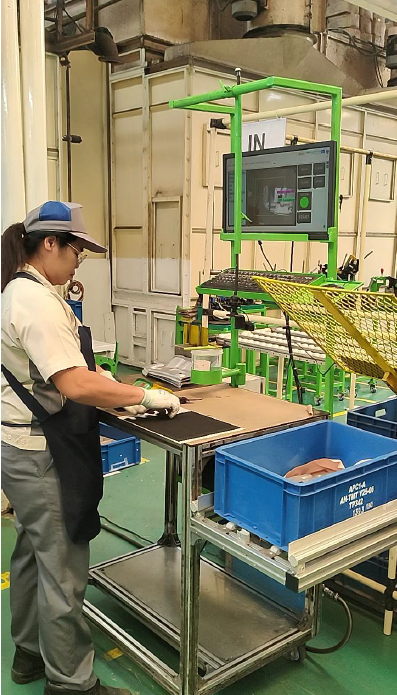
In addition, the Company has continued to collaborate closely with customers under the “TCC-TPS I-Group Jishuken” project, building on the “TCC-TPS Advance Jishuken Activity” implemented in the previous year. The initiative applies accumulated knowledge and best practices to establish a long-term approach for production process improvement, with the objective of enhancing cost competitiveness. Through this project, the Company worked jointly with customers to identify sources of inefficiency and unnecessary costs, conduct root cause analysis, and implement targeted improvement measures. Key initiatives included production layout optimization and the development of automated material handling systems, aimed at reducing process time, minimizing waste, and improving overall production efficiency. As a result of these efforts, the Company achieved a 41% reduction in working time, exceeding the initial target, and a 35% increase in productivity. In addition, defects for the targeted product were reduced to zero, and overall production costs were reduced by approximately 5%. The success of the project was further recognized through customer awards, and the Company was selected as a benchmark organization, with other suppliers invited to study and replicate its best practices.
Beyond operational improvements, the project also contributed significantly to employee capability development, enhancing knowledge, technical skills, and practical application. Notably, 1 employee involved in the project was promoted and received a salary increase, reflecting strong performance and demonstrated potential.
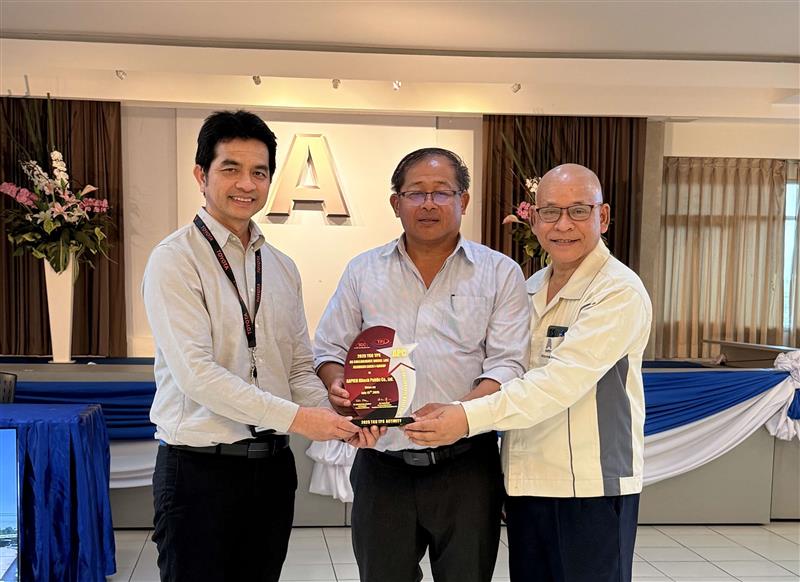
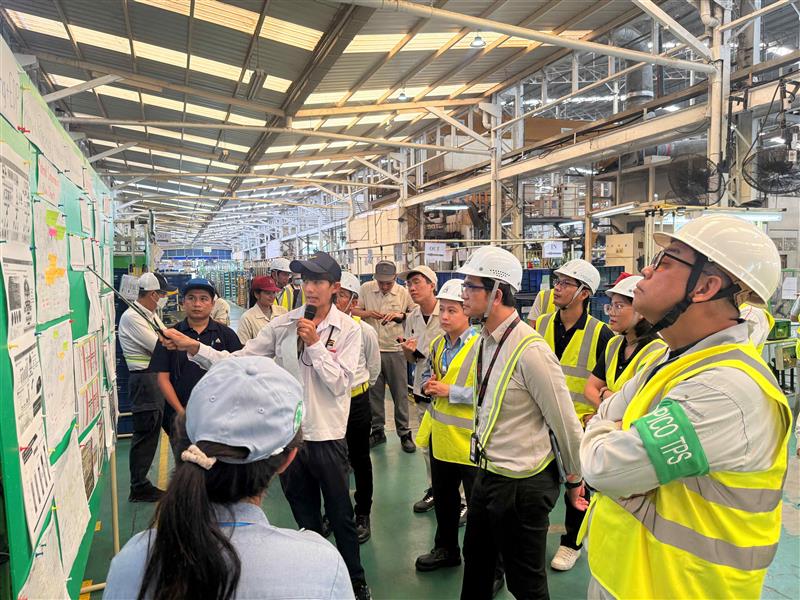
Community & Social — Plan & Guidelines
Has a Community & Social Plan
Yes
Plan Description
The Company is committed to conducting its business sustainably alongside fulfilling its social responsibilities. Social and community development has been identified as one of the Company’s material topics through a systematic stakeholder materiality assessment process.
The Company aims to create Shared Value between the organization and surrounding communities by prioritizing assistance, relief, and remediation for affected groups, while also promoting quality of life, expanding access to education, and supporting career development for people in communities near its operating sites. These efforts are intended to foster strong, resilient communities that can grow sustainably and maintain a good standard of living over the long term.
In 2025, the Company continued to prioritize expanding educational opportunities and skills development, alongside supporting environmentally friendly innovations within surrounding communities. The objectives are to promote livelihoods, generate income, enhance environmental awareness, and encourage environmentally responsible community practices. These initiatives contribute to improving overall environmental quality, reducing pollution and greenhouse gas emissions, and strengthening long-term economic and social sustainability.
The Company categorizes its community development initiatives into two main areas:
Environmental awareness promotion activities
Education support and quality-of-life development programs for community members
These projects are implemented by cross-functional working teams, including regional sustainability committees responsible for social and community development. The Western Region team oversees activities in Phra Nakhon Si Ayutthaya Province, while the Eastern Region team is responsible for Chonburi, Rayong, and Samut Prakan Provinces.
The Company establishes clear objectives and measurable performance indicators for each project and conducts ongoing monitoring and evaluation. The outcomes are used to continuously improve program effectiveness and ensure tangible positive impacts. Through these efforts, the Company aims to enhance community well-being, improve quality of life, and sustainably reduce environmental impacts in the surrounding areas.
Plan Areas
| Plan Area | Other — Please Specify |
|---|---|
| Employment and professional skill development | |
| Education | |
| Sports and recreation | |
| Occupational health, safety, health, and quality of life | |
| Disadvantaged and vulnerable groups | |
| Water and sanitation management | |
| Reducing inequality and promoting social equality | |
| Others | PM2.5 pollution reduction |
Community & Social — Targets
Has Set Community & Social Targets
Yes
Targets
| Indicator | Target Areas | Target Year | Target Year — Description |
|---|---|---|---|
| The number and issues of related complaints. | 3045 · Other name: Complaints regarding environmental impact and human rights violations · Description: Others | 2,030 | There are no complaints regarding environmental impacts, other environmental issues, human rights violations, or other social issues from the surrounding communities. |
| Average community satisfaction score | 3045 · Other name: Average community satisfaction score · Description: Others | 2,030 | Achieve 80% of average community satisfaction score. |
| Financial contributions to community support and development projects | 3045 · Other name: Financial contributions to community support and development projects · Description: Others | 2,030 | Financial contributions to community support and development initiatives represented 2% of the Company’s net profit |
Community & Social — Performance & Outcomes
Has Performance Results
Yes
Performance Description
In 2025, the Company received no complaints related to human rights violations or environmental impacts arising from its operations. Nevertheless, the Company remains committed to supporting and empowering surrounding communities through various initiatives in line with its sustainability strategy.
Youth, local communities, public organizations, religious institutions, and charitable foundations located near the Company’s operational sites in Phra Nakhon Si Ayutthaya, Chonburi, Rayong, Samut Prakan, and other provinces received support aimed at improving quality of life and expanding access to education.
The Company’s community initiatives can be categorized into two main areas:
Category 1. Environmental awareness and environmental stewardship initiatives
1. Innovation and Local Wisdom Support Project: “Turning Straw into Gold” and Smoke-Free Community Initiative
The Company is committed to conducting its business sustainably while upholding strong social responsibility. Environmental management and community development have been identified as material issues through a systematic stakeholder engagement and materiality assessment process. In line with its greenhouse gas (GHG) reduction targets and climate risk management strategy, the Company has extended its Climate Action initiatives to communities surrounding its operations, aiming to create long-term shared value between the organization and society.
The issue of PM2.5 air pollution, significantly caused by open burning in agricultural areas, has adversely affected public health, environmental quality, and greenhouse gas emissions. Recognizing these impacts—particularly in Pathum Thani, where large agricultural areas are located near the Company’s facilities—the Company has collaborated with government agencies, the Thailand Institute of Scientific and Technological Research (TISTR), and community enterprises to implement an innovative microbial solution. This initiative promotes the use of decomposer microorganisms to break down rice straw as an alternative to open burning, thereby reducing haze, lowering GHG emissions, and supporting environmentally friendly agricultural practices.
Since 2023, the Company has signed a Memorandum of Understanding (MOU) and provided ready-to-use microbial products to farmers under a pilot project. The Company closely monitored the results through interviews with participating farmers and consultations with community enterprise representatives to assess the effectiveness of the microorganisms and the benefits delivered to farmers and local communities. The pilot project received positive feedback. Building on its success, the Company officially launched the full-scale project in 2024 with a total budget allocation of THB 10 million over a three-year period. The project focuses on two main approaches:
Providing ready-to-use microbial products to farmers to decompose rice straw as an alternative to burning; and
Supporting research on the application and effectiveness of microbial solutions for rice straw decomposition.
Approach 1: Providing Ready-to-Use Microbial Solutions to Farmers as an Alternative to Rice Straw Burning
Traditionally, many farmers burn rice stubble, straw, and weeds after the harvest season to prepare their fields for the next cultivation cycle. This method is widely practiced because it is convenient, quick, and reduces the time required for land preparation. However, such burning practices degrade soil quality and contribute to haze and fine particulate matter (PM2.5), which adversely affect public health and environmental quality.
Innovative research on microorganisms has shown that using beneficial microbes to decompose rice stubbles offers a simple, cost-effective, and efficient alternative. This eco-friendly approach not only prevents soil degradation but also eliminates the production of smog and PM2.5. Additionally, microbial decomposition enriches the soil with organic matter and essential nutrients, leading to an estimated increase in crop yield value of Baht 300 per rai (or per 1,600 square meters) and a reduction in production costs by Baht 877–1,728 per rai (or per 1,600 square meters).
Recognizing the severity of haze pollution and the environmental and economic benefits of microbial solutions, the Company has entered into a collaboration to provide ready-to-use microbial products to farmers in Pathum Thani, a major agricultural area located near the Company’s operations. The initiative aims to encourage farmers to shift from open burning to microbial decomposition of rice straw, thereby contributing to tangible reductions in PM2.5 at the local level.
The initiative began in 2023 as a pilot project, during which the Company provided microbial products for farmers to test in their fields. The outcomes were closely monitored through interviews with participating farmers and discussions with community enterprises, and the pilot received positive feedback. Building on this success, the project was expanded in 2024 with the distribution of 4,000 packs of microbial products, valued at THB 1.69 million. The initiative continued in 2025 with the same quantity and budget allocation.
This support has helped reduce rice straw burning across agricultural areas covering all districts of Pathum Thani, totaling 20,000 rai. The initiative has resulted in an estimated reduction of approximately 1,326 tons of carbon dioxide equivalent (tCO2e) in greenhouse gas emissions. In total, 1,988 farmers have benefited from the project, reflecting the successful scaling up of the pilot initiative into a structured, province-wide program.
Approach 2: Supporting Research on Microbial Solutions for Rice Straw Decomposition as an Alternative to Burning
The Company recognizes that addressing the issue of PM2.5 requires not only short-term solutions but also long-term, sustainable approaches. While providing ready-to-use microbial products can help reduce open burning in the short term, it may not lead to a permanent change in farmers’ practices due to the recurring cost of obtaining microbial products. To promote long-term sustainability, the Company has therefore provided research funding to the Thailand Institute of Scientific and Technological Research to develop microbial culture incubation equipment and transfer related knowledge to community enterprises. This initiative enables local community enterprises to propagate microbial cultures independently and distribute them to farmers in their areas. In addition, practical training sessions are organized for farmers on how to apply microbial solutions effectively in rice fields. The Company regularly monitors the project’s progress and evaluates its outcomes on a quarterly basis through site visits and consultations with farmers. Annual project reviews are also conducted throughout the three-year implementation period to assess effectiveness and refine the approach where necessary. The ultimate goal is to encourage farmers to transition from traditional practices to more sustainable farming methods that minimize environmental and social impacts.
During 2024–2025, the Company supported 15 microbial incubation units for seven community enterprises in Pathum Thani, with a total budget of THB 4.28 million, comprising THB 2.57 million in 2024 and THB 1.71 million in 2025. These incubation units have the capacity to produce microbial solutions sufficient to cover agricultural areas of up to 168,000 rai per year, benefiting a total of 1,988 farmers.
In 2025, the research team conducted a survey to gather feedback and evaluate the results of microbial application among participating farmers. The findings indicated that the microorganisms help soften rice stubble, making it easier to plow back into the soil. They also improve soil structure, making the soil more porous and balanced, while water in the rice fields remains clear and odor-free. Moreover, rice plants showed better growth, and farmers were able to reduce fertilizer usage by at least 20 percent. Overall farmer satisfaction with the project averaged 96 percent, and 97 percent of respondents expressed their intention to continue using microbial solutions instead of burning.
The outcomes from both approaches, implemented from late 2024 through 2025, demonstrate tangible success resulting from collaboration among the Company, research institutions, and government agencies. This partnership has supported farmers in transitioning from open burning of rice residues to environmentally friendly practices, contributing to greenhouse gas emission reductions, mitigating PM2.5 pollution, and improving the long-term quality of life for local communities.
2. Waste Management and Recycling Initiative: “5 Giving Project”
The Company recognizes the importance of systematic waste management in order to reduce environmental impacts from operations across the value chain. To address this, the Company has implemented the “5 Giving Project”, a waste management and recycling initiative based on the 3R principles (Reduce, Reuse, Recycle). The project aims to reduce waste at the source, promote efficient use of resources, and increase the proportion of materials that can be reused or recycled to create the highest possible value.
The “5 Giving Project” focuses on the proper separation of five types of waste:
Plastic bottle caps
Unclaimed lottery tickets
Staples, Hoop, Aluminum Screw caps & cans
Plastic straws
Hard plastic cups
The Company has set up clearly designated waste separation points within its facilities and continuously raises awareness among employees at all levels on proper waste sorting and management practices. This ensures that each type of material can be effectively recycled or processed, reducing the amount of waste sent for disposal and minimizing environmental impacts. Beyond waste reduction, the “5 Giving Project” also creates social value by transforming collected materials into useful products, such as plastic chairs, cremation flowers, and pillows for bedridden patients.
This initiative reflects the principles of the Circular Economy, which aims to maximize resource efficiency while generating benefits for both the environment and society. The Company has expanded the “5 Giving Project” across all business units and aligned the initiative with the Low Emission Support Scheme (LESS) implemented by the Thailand Greenhouse Gas Management Organization (Public Organization). This enables the greenhouse gas reductions and carbon sequestration from recycling activities to be monitored and verified according to established standards.
In 2025, the Company continued the implementation of the project from the previous year by collecting and delivering sorted materials to five partner organizations. These materials were further utilized in recycling processes and social initiatives, with details of the contributions and outcomes for each material type presented below.
The results of proper waste segregation into 5 main categories are summarized as follows: | |
Plastic Bottle Caps | Donated to Precious Plastic Bangkok, Bangkok Province, to be recycled into plastic chairs. |
Unclaimed Lottery Tickets | Donated to the Special Child Development Center at Wat Huai Moo, Ratchaburi Province, to be transformed into cremation flowers and wreaths. A total of 22.70 kilograms of lottery tickets were donated, which can be used to produce 16 wreaths. |
Staples, Can Tabs, and Aluminum Screw Caps | Donated to the Association of the Physically Handicapped International, Pathum Thani Province. A total of 36.23 kilograms were donated and sold, with the proceeds used to purchase three-wheel wheelchairs for persons with disabilities. |
Large Plastic Straws | Donated to the Sustainable Energy Foundation, Bangkok Province, to produce pillows for bedridden patients. A total of 1.42 kilograms of plastic straws were donated, which can be used to produce 1 pillow for a bedridden patient. |
Hard Plastic Cups | Donated to Wat Chak Daeng, Samut Prakan Province, to be recycled into plastic fibers for fabric production. A total of 29.74 kilograms of hard plastic cups were donated. |
In addition, the Company has implemented activities aligned with the criteria of the Low Emission Support Scheme (LESS). One such initiative involves utilizing organic waste as animal feed, which helps reduce the volume of waste requiring disposal while also contributing to greenhouse gas emission reductions. Through this initiative, the Company was able to reduce or sequester approximately 4,408 tons of carbon dioxide equivalent (tCO2e). The results of this initiative can be verified, measured, and certified in accordance with the standards established by the program. In recognition of its commitment and tangible outcomes, the Company received a certificate of recognition from the Thailand Greenhouse Gas Management Organization (TGO) for its achievements in implementing greenhouse gas reduction activities. This recognition reflects the Company’s capability to translate environmental initiatives at the operational level into measurable and nationally recognized outcomes. Moreover, the certification not only confirms the accuracy and effectiveness of the Company’s environmental management efforts but also highlights its role in supporting Thailand’s national greenhouse gas reduction goals and conducting business with long-term environmental responsibility.
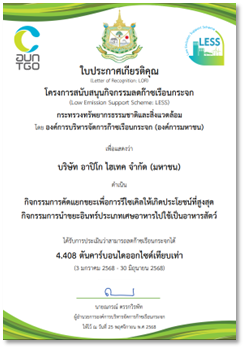
3. Recycled Drinking Cup Production and Donation Project for Educational Institutions
The Company places strong emphasis on promoting efficient resource utilization and reducing environmental impacts, while also supporting education and improving the quality of life for youth in surrounding communities. By leveraging its internal capabilities and manufacturing processes, the Company seeks to maximize the value of available resources. In this regard, the Company implemented a recycling initiative to produce drinking cups from recycled materials and donate them to Wang Pong School in Phetchaburi Province.
Under this project, used plastic bottle caps collected within the Company were recycled through an injection molding process to produce durable drinking cups suitable for use in educational institutions. This initiative helps replace single-use plastic cups, thereby reducing the consumption of new resources and minimizing plastic waste. The produced drinking cups meet product quality standards and are made from food-grade materials, making them safe and appropriate for food and beverage use.
Through this initiative, the Company produced and donated 700 drinking cups to Wang Pong School in Phetchaburi Province for use by students and school personnel in their daily activities. The project helps promote better hygiene practices within the school while reducing reliance on disposable containers. The total project cost was THB 2,076, reflecting the Company’s ability to efficiently manage costs and utilize internal resources to create meaningful value.
Beyond reducing single-use plastic consumption and lowering the use of virgin plastic resin, the initiative also supports educational opportunities and enhances the quality of life for students in the community. It helps reduce inequalities in access to basic learning necessities while demonstrating the Company’s commitment to contributing to social development by applying its expertise and operational capabilities to create tangible benefits for society.
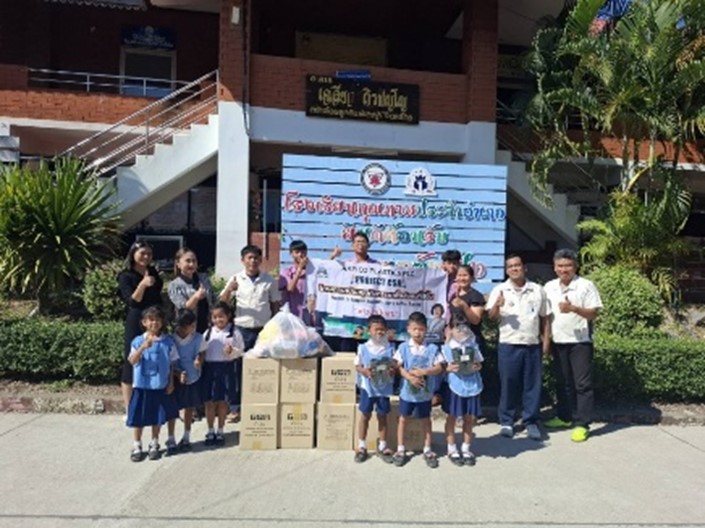
Category 2: Education support and community well-being initiatives
1. Scholarship Program for Employees’ Children
The Company recognizes the importance of improving the quality of life of its employees and their families, particularly in the area of education, which is considered a fundamental pillar for long-term human capital development. Therefore, the Company has continuously implemented an annual scholarship program for employees’ children who demonstrate strong academic performance. The program aims to encourage educational achievement while helping ease the financial burden of education expenses for employees’ families.
In 2025, the Company’s automotive parts manufacturing and distribution businesses in Thailand awarded a total of 47 scholarships, with a total value of THB 0.16 million. The scholarships were distributed across different education levels as follows:
Primary education: 29 scholarships
Secondary education / Vocational Certificate (VC) / Higher Vocational Certificate (HVC): 16 scholarships
Undergraduate level: 2 scholarships
Beyond financial assistance, the program also aims to inspire young people to recognize the value of education and to promote a culture of perseverance and responsibility—key foundations for future human capital development.
The continued implementation of this program reflects the Company’s role in creating shared value with internal stakeholders, particularly through investments in human and social capital, which are essential components of the Social dimension of sustainable business practices. The Company believes that supporting education not only enhances learning opportunities for youth but also helps lay a strong foundation for the long-term development of society and local communities.
2. Social Contribution Programs
2.1 Promoting Social Contribution through Blood Donation Activities
The Company recognizes the importance of contributing to public health and supporting the national healthcare system, particularly in addressing blood shortages, which remain a critical resource for medical treatment. To help address this need, the Company organized blood donation activities in collaboration with public health agencies throughout 2025, providing employees across the Group with the opportunity to contribute to saving lives and supporting patients in need. In 2025, the Company organized 5 blood donation campaigns, receiving strong participation from employees across the Group. A total of 312 employees registered to participate, of which 278 employees successfully donated blood. The campaigns collected approximately 112 units of blood, equivalent to more than 39,000 cc, which were delivered to healthcare facilities for use in patient treatment. These contributions help increase blood reserves within the healthcare system and reduce the risk of blood shortages during critical situations.
Beyond supporting healthcare needs, the Company’s blood donation activities reflect the organization’s culture of giving and social responsibility. The initiative also encourages employee engagement in creating shared value between the Company and society, as employees play an active role in supporting the health and well-being of communities and the broader healthcare system. The Company remains committed to continuing these activities in the long term while promoting health awareness and employee participation, contributing to stronger public health resilience and sustainable social development in line with the Company’s CSR commitments and sustainability goals.
2.2 Supporting Medical Equipment to Strengthen Healthcare Services
The Company recognizes the important role that the private sector can play in strengthening the national healthcare system, particularly through supporting public healthcare institutions that serve as essential providers of medical care at the community level. To contribute to improving healthcare capacity, the Company implemented a program to support medical equipment aimed at enhancing treatment capabilities and improving the efficiency of diagnosis and patient care.
In 2025, the Company donated medical equipment to Chonburi Hospital, including one Philips Mobile Fluoroscopy Unit (C-Arm) and two VLFT 10 Gen Series Energy Platform systems, with a total contribution value of approximately THB 7.7 million. These advanced medical devices play a crucial role in supporting a wide range of medical treatments, particularly in surgical procedures, critical patient care, and treatments requiring high technological precision. The support enhances the hospital’s capacity to treat patients, alleviates limitations related to medical resources, and strengthens the delivery of timely and high-quality healthcare services. This initiative benefits both medical personnel and the broader population in Chonburi Province and surrounding areas.
This program reflects the Company’s commitment to conducting business while creating positive social value. By supporting stakeholders within the healthcare system, the Company contributes to broader social sustainability goals, in line with its ESG commitments and long-term mission to enhance the quality of life for communities.
2.3 Supporting Employees and Mitigating the Impacts of Natural Disasters
The Company places great importance on the well-being of its employees as key stakeholders and recognizes that natural disasters can significantly affect employees’ quality of life, livelihoods, and economic stability. In 2025, flooding in several areas across Thailand affected employees within the Group, causing damage to housing, disruptions to daily life, and increased financial burdens for affected families. In response, the Company implemented an assistance program to support employees impacted by flooding, aiming to alleviate hardship and help restore their living conditions during the recovery period. Financial assistance was provided to employees across the Group who were directly affected by the floods.
This program supported 66 employees from several affiliated companies, with total financial assistance amounting to THB 92,500. The support was intended to help address urgent expenses following the disaster, such as housing repairs, essential living costs, and the restoration of family livelihoods. The Company ensured that assistance was delivered in a timely and appropriate manner to help employees regain stability and return to normal life as quickly as possible.
Through this initiative, the Company was able to provide targeted and meaningful support to affected employees, helping reduce hardship and enabling them to resume their work and daily lives more smoothly. The program reflects the Company’s commitment to responsibly caring for its workforce while advancing broader social responsibility and ESG objectives, supporting sustainable organizational and community resilience in the long term.
3. Sustainable Community Development Program
The Company places strong emphasis on sustainability across all dimensions, including Environmental, Social, and Governance (ESG). Sustainability initiatives are systematically implemented through the Company’s Sustainability Working Committee, which covers all subsidiaries within the automotive parts manufacturing business in Thailand. This structure ensures that community development initiatives are effectively managed and capable of delivering tangible and measurable outcomes.
In 2025, the Company focused on implementing school development initiatives to support educational institutions with limited financial resources for infrastructure maintenance and development. The program prioritizes creating a safe and supportive learning environment that promotes students’ well-being, hygiene, and quality of life, while also enhancing practical knowledge and life skills that can contribute to future income generation.
The Company conducted surveys to identify schools with financial limitations and engaged with teachers and students to understand their needs. Based on these discussions, the Company developed a support plan covering several key areas, including the following initiative.
3.1 Agricultural Development for School Lunch Programs
The Company recognizes the importance of ensuring that students have sustainable access to safe and nutritious food. Therefore, it implemented an initiative to develop agricultural areas within schools to support school lunch programs. The project aims to create a self-sustaining food source while also providing teachers and students with practical skills in agriculture and basic management. The project was initially launched in 2024 and continued through 2025.
In 2025, the Company supported the establishment and development of a mushroom cultivation house, including the necessary equipment, with a total budget of THB 17,555. This support helped establish the basic infrastructure required for the school to carry out the activity in a structured and sustainable manner. Following the implementation, the school began cultivating mushrooms and growing vegetables on a continuous basis. Teachers and students actively participated in managing the production process, and part of the harvest has been used in the school lunch program, helping improve student nutrition while reducing food costs.
In addition, the school established a "Mushroom Bank Club", allowing students to participate in managing production and conducting basic sales activities to parents, the local community, and AAPICO. Revenue generated from these sales is reinvested as a revolving fund to support future production cycles. This activity helps students develop a basic understanding of cost planning, revenue management, and systematic business operations.
Through continuous monitoring, the school has demonstrated clear improvement in mushroom cultivation skills and production planning. Compared with the early stage of the project, the school is now able to manage production more effectively.
In 2025, the school was able to continuously sell mushrooms to parents, the local community, and private sector partners in the area, generating total revenue of THB 8,860. Despite facing some weather-related challenges during certain periods, the revenue generated reflects the viability of the system established under the project. The income has been reinvested as a revolving fund for purchasing mushroom spawn and other necessary materials for the next production cycle, enabling the school to strengthen its ability to operate more independently.
Beyond financial outcomes, the project has also generated several qualitative benefits, including:
Students gaining hands-on experience in the production process from upstream to downstream
The establishment of systematic income–expense records and production planning
The use of some agricultural products in the school lunch program to reduce food costs
The Mushroom Bank Club playing an active role in managing and selling the products
The results demonstrate that providing support through system development and capacity building can generate tangible social value, including improved learning opportunities, better nutrition for students, and the creation of sustainable income-generating activities within the school. These outcomes form an important foundation for long-term sustainable development within the community.
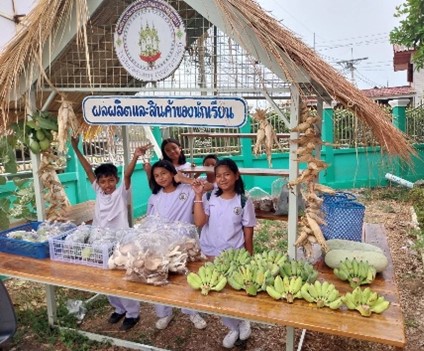
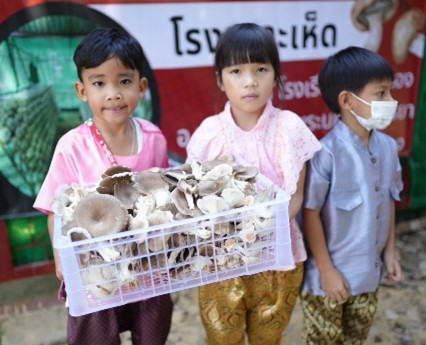
3.2 Supporting Sports Equipment to Promote Health and Relationships in Educational Institutions
The Company recognizes the importance of holistic youth development and acknowledges that sports activities play a vital role in strengthening physical health, fitness, and social development among students. The Sustainability Working Team therefore supported sports equipment for Bandong Wittayakarn School, Nakhon Nayok Province, to be used in physical education classes and school sports activities. The total value of the donated equipment amounted to THB 15,123. This support enhances the school’s readiness to organize sports activities with adequate and appropriate equipment, enabling students to participate in exercise and skill-building activities more effectively and inclusively. A total of 268 students and educational personnel benefited from this initiative. Sports activities not only promote physical well-being but also help cultivate teamwork, responsibility, and positive relationships among students and teachers. Through this initiative, the Company contributes to the continuous development of youth potential within the community. Promoting well-being from an early age forms an essential foundation for quality growth and represents part of the Company’s effort to create shared value with society in the long term.
3.3 Promoting Waste Separation Knowledge and Developing a School Waste Bank
The Company organized an educational activity on waste separation for primary school students at Wat Ban Kao School, Chonburi Province, aiming to instill knowledge and awareness of proper waste management from an early age.
The activity focused on separating waste into four main categories: recyclable waste, general waste, organic waste, and hazardous waste, along with guidance on appropriate management practices that can be applied in daily life.
The session was conducted by the Company’s employees, who served as volunteer speakers sharing knowledge on resource and environmental management. A total of 80 teachers and students participated in the activity.
The initiative also aims to strengthen the effectiveness of the school’s waste bank system by improving its operational structure and efficiency, while fostering students’ understanding of their role in managing waste at the source within the school environment. This support enables the school to practically apply the knowledge gained and further develop its waste management practices. As a result, the program contributes to reducing waste generation, increasing the value of recyclable materials, and encouraging environmentally responsible behaviors in the long term. It also reflects the active role of the Company’s employees in transferring knowledge to support community and environmental development.
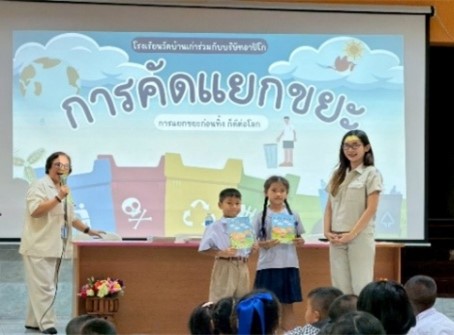
3.4 Promoting First Aid Knowledge and Community Safety Awareness
The Company organized a basic first aid training program at Wat Sripholothai School, Chonburi Province to enhance knowledge, skills, and preparedness in responding to health emergencies and accidents among teachers, educational staff, and primary school students.
The training focused on practical first aid knowledge that can be applied in everyday situations, including assisting injured individuals in accidents, handling medical emergencies, and properly using first aid equipment.
Employees from the Company’s Safety Department served as volunteer trainers, promoting knowledge sharing and community engagement. A total of 50 participants, including kindergarten and primary school students (Grades 1–6), teachers, and school staff, attended the training.
In addition, the Company provided first aid equipment for use within the school. This initiative helps improve safety awareness, reduce the risk of severe injuries, and demonstrates the Company’s commitment to conducting social responsibility activities that generate tangible and sustainable positive impacts for the community.
3.5 Donating Books to Expand Learning Opportunities
The Company organized a book donation campaign to support learning and expand access to educational resources for students at Wat Ban Kao School, Chonburi Province. The initiative aims to promote equitable access to educational materials and reduce learning disparities within the community. Employees were encouraged to donate books in good condition, which were then collected and delivered to the school to support learning resources in the school library. Through internal communication and employee participation, the Company successfully collected 758 books. The donated books were provided for the benefit of 80 primary school students, enhancing their access to knowledge and learning opportunities. The Company also plans to conduct follow-up evaluations to assess the utilization of the donated books, such as monitoring the number of library users and the condition of the books, to ensure that the initiative effectively supports learning opportunities. In addition, the project was further expanded to include complementary activities aimed at improving students’ learning and well-being, such as donating school supplies and sports equipment and providing lunch for students. The total project value amounted to approximately THB 35,000, reflecting the effective use of resources while supporting sustainable educational development.
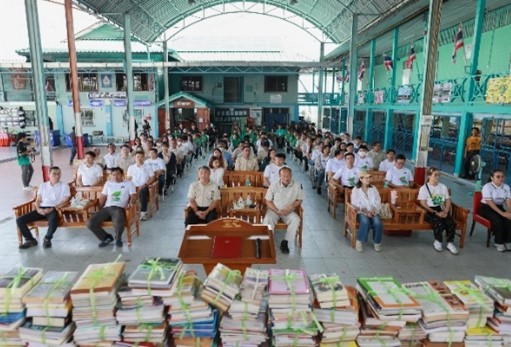
3.6 Enhancing the Learning Environment Through School Facility Improvements
The Company carried out a project to improve the physical environment at Bandong Wittayakarn School, Nakhon Nayok Province, with the objective of enhancing the quality of learning spaces and facilities to ensure they are safe, suitable, and conducive to students’ physical and intellectual development. The school environment is considered an important factor influencing the learning atmosphere, safety, and students’ readiness in daily life.
Key activities included repainting the school fences and playground equipment to improve safety and appearance, painting road surfaces and activity areas with educational patterns designed to stimulate children’s engagement and encourage learning beyond the classroom, and repairing classroom desks to ensure they are sturdy, safe, and ready for use. These improvements help reduce risks associated with damaged furniture and create a more suitable classroom environment.
The project was implemented over three phases within three days, depending on the nature of activities in each area. Approximately 83 employee volunteers per day participated in the activities, demonstrating strong employee engagement through the contribution of their time, skills, and cooperation in supporting community educational development. The project also helped strengthen relationships among the Company, the school, and the local community.
The total project value was THB 44,075, benefiting 268 stakeholders within the school, including students and educational personnel. The improvements created a brighter, safer, and more supportive learning environment, enabling students to use the facilities with confidence and in a manner appropriate to their age. This initiative contributes to improving educational quality and the overall well-being of youth in the long term.
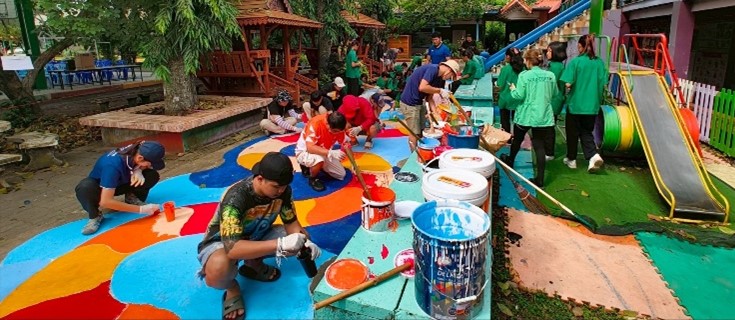
Law Violation Incidents
Law Violation Incidents
| Metric | Current Year | Previous Year | Two Years Ago |
|---|---|---|---|
| The total number of cases or incidents of significant violations of laws or regulations regarding social and human rights (Cases) | 0 | 0 | 0 |
| The total number of cases or incidents that cause significant labor disputes (Cases) | 0 | 0 | 0 |
| The total number of cases or complaints related to consumer rights violations (Cases) | 0 | 0 | 0 |
| The total number of cases or complaints related to partner rights violations (Cases) | 0 | 0 | 0 |
| The total number of cases or incidents that cause disputes with the community/society (Cases) | 0 | 0 | 0 |
| The total number of cases or incidents related to cyber security or customer data breaches (Cases) | 0 | 0 | 0 |
| The total number of cases or incidents related to safety and occupational health at work (Cases) | 0 | 0 | 0 |